Dual degree in Journalism and Corporate Communication and International Relations
Enrolment open

- ModalityIn-person
- LanguagesCatalan, Spanish, English
- Duration5 academic years
- Credits334
- DateSeptember 2026
- ShiftsMorning / Afternoon
- Planning
8 a.m. to 2 p.m. / 3 p.m. to 9 p.m.
- Places5
- Location
Blanquerna-URL - Plaça Joan Coromines. 08001 Barcelona
- Faculty
School of Communication and International Relations
"At Blanquerna we apply an individualized follow-up, close to the student, interactive, with highly practical content and the latest technological equipment"
Pere Franch, professor of Journalism and International Relations.

"Blanquerna is much more than a school: it is people, opportunities, knowledge, research, growth and future. Thanks to Blanquerna I have progressed academically and professionally. I felt at home there; I made it my own. Make it your own"
Lydia Dionís Giordano, former student of the bachelor's degree in International Relations.

News
Reporters Without Borders and Blanquerna sign an educational cooperation agreement
June 29, 2021
Reporters Without Borders and Blanquerna sign an educational cooperation agreement
The culture of peace and water as a common benefit, protagonists of the Joan Gomis Memorial
October 26, 2020
The culture of peace and water as a common benefit, protagonists of the Joan Gomis Memorial
The degree in International Relations and the master's degree in Political and Social Communication, among the best in Europe according to the U-Multirank
June 16, 2020
The degree in International Relations and the master's degree in Political and Social Communication, among the best in Europe according to the U-Multirank
Communication sector focused on the use of Big Data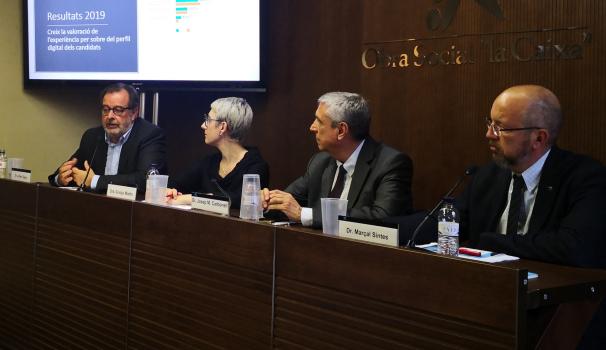
April 11, 2019
Communication sector focused on the use of Big Data

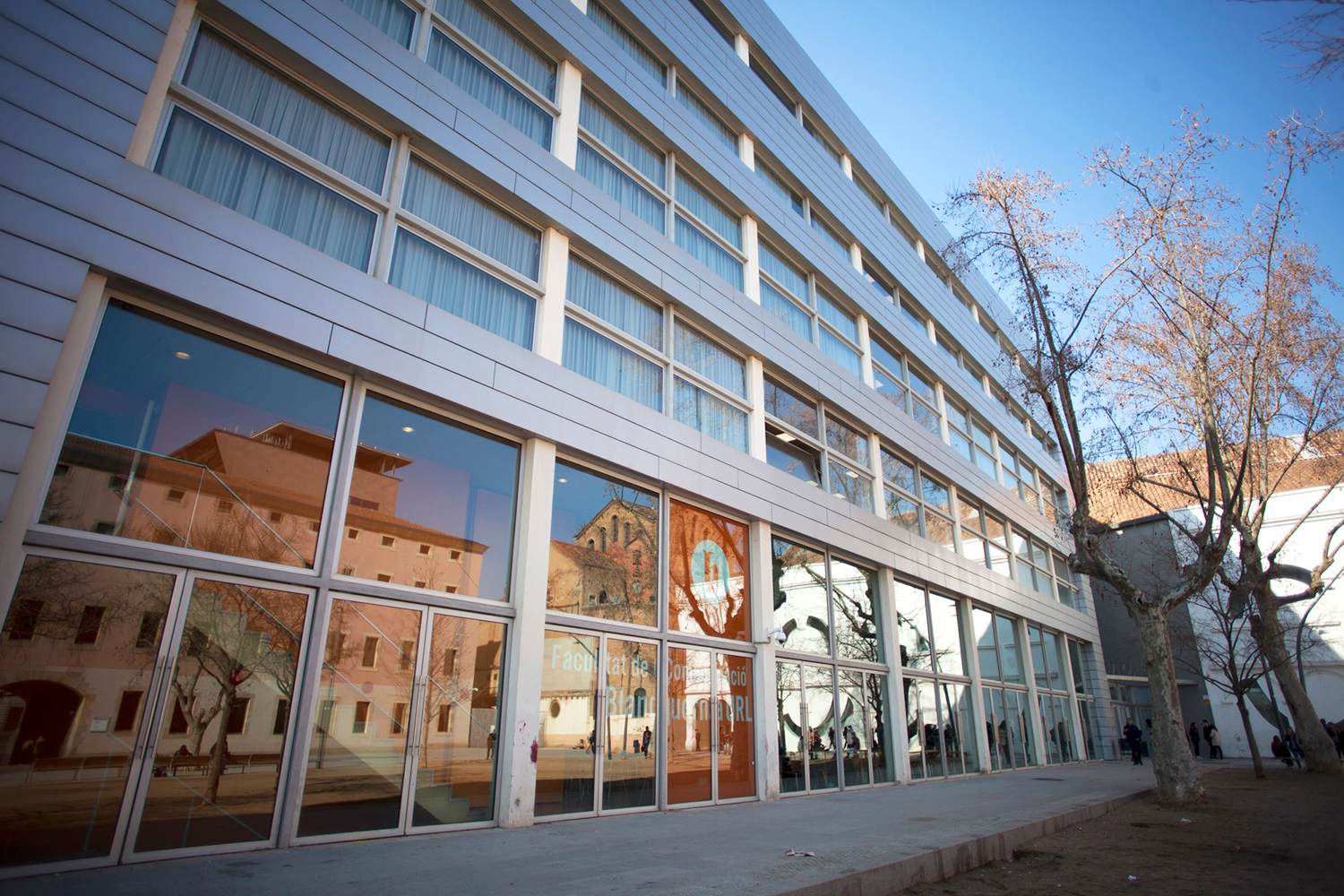


Director
They are the journalists in charge of the teams of newspapers, television channels and audio-visual production companies, radio stations and various programs.
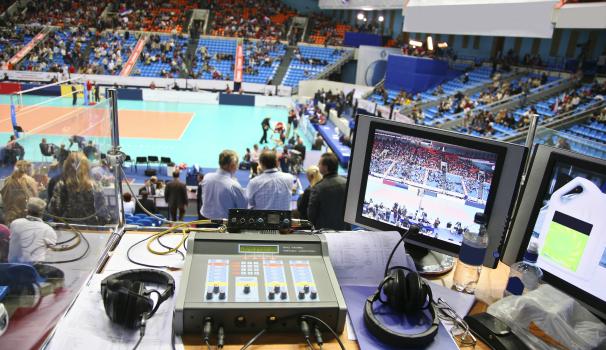
Section heads and editors-in-chief
The media can be divided into subject areas such as international, politics, economics, technology, culture and sports, among others, led by journalists.

Editor
The writing of previously obtained and contrasted information is essential.

Columnist
Opinion pieces are part of the journalism work.

Correspondent
Ensuring news coverage from different parts of the world is absolutely necessary.

Photojournalist
Photojournalists play an essential role by showing reality in images.

Designer, layout designer, art director
Design, layout, infographics and data visualization are among the roles of the journalist.

Verifier
Journalists also work in verification teams to combat disinformation.

Gender editor
The growing sensitivity to equality between people has brought about the creation of the figure of gender editor.
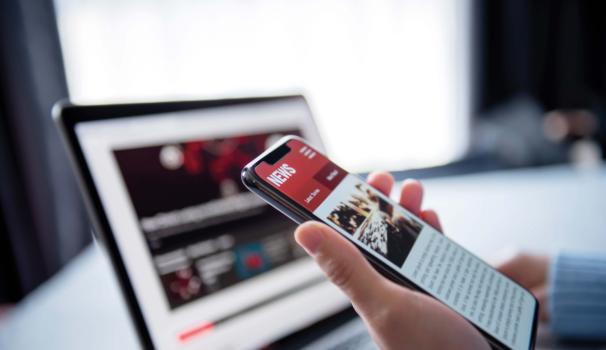
Digital content
The media, companies and institutions are increasingly demanding digital talent, specialized in managing and developing content for their digital platforms and social networks.

Radio and podcast
The world of audio is experiencing a peak moment and occupies journalism professionals.

TV reporter
A TV reporter is a professional journalist.
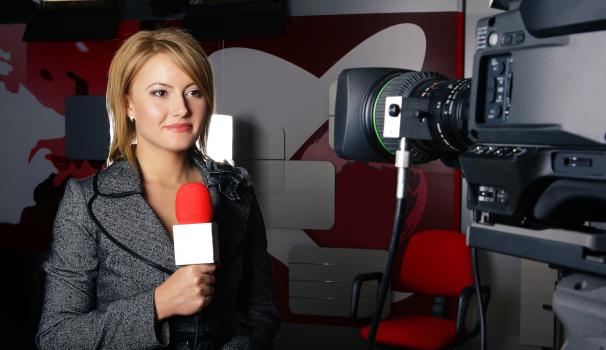
TV presenter
There are journalists working in front of the camera, conducting television programs
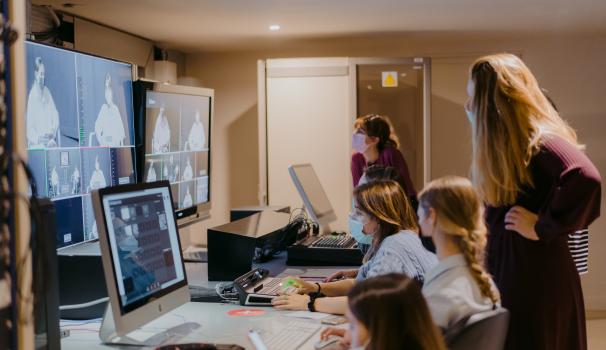
Producer
Preparing subjects and contact with interviewees are tasks carried out by media producers.
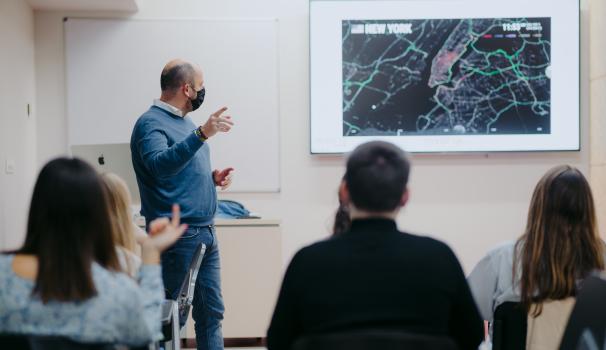
Communication sector
A professional who sets the institution's communication strategy.
Press officer
Journalist in charge of media relations.
Account manager and executives
Communication agencies—companies in charge of conducting various corporate communication projects—hire journalists as directors and account executives to manage the communication of the companies and institutions for which they work.

Spokesperson or spokesperson trainer
A professional specialized in speaking to the organization's target audiences.
Digital content
The talent for managing and developing digital content is a highly demanded profile in corporate communication.
Specialist in international affairs
Diplomacy, policy-making and international agreements, peace and security, conflict management, human rights and international law, humanitarian aid, development policy, education policy, health policy, environmental sustainability, migration and refugees, trade and finance.
International business consultant
Management consultant, strategy consultant, internationalization consultant, export manager.

Development of international projects
Global communications director, grant writer, program coordinator, program manager, development and fundraising manager.

International communications and public relations specialist
Corporate communications, non-profit communications specialist, lobbyist, journalist, global communicator, public and institutional relations.

Analyst
Intelligence specialist, political analyst, risk analyst, political consultant, policy analyst, researcher in international security and cybersecurity.

Teaching
University professor, lifelong learning trainer.

Television studios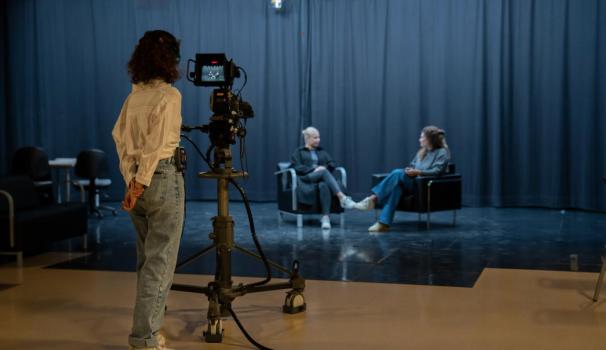
Television studios
In front of or behind the camera? You can work on any of these skills in the school's two television studios. In addition to the cameras, you can learn how the production room, the lighting and the teleprompter work.
Radio studios
Radio studios
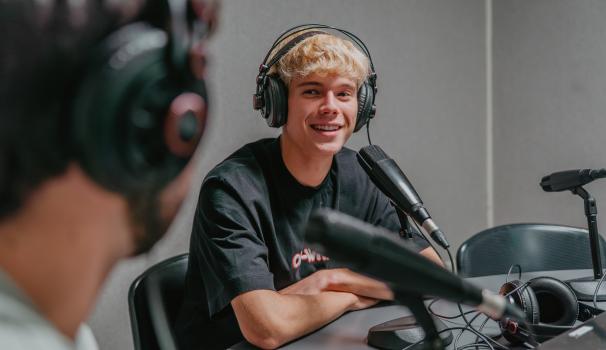
Whether it's broadcasting live or recording a podcast, you'll find all the equipment you need to do radio. The school has two radio studios and three individual workspaces equipped with microphones and telephones for external interviews.
Digital writing laboratory
Digital writing laboratory
Applying content creation techniques to the web is essential to internalizing knowledge. Journalism, advertising and corporate communication have evolved into the digital environment.
Video post-production rooms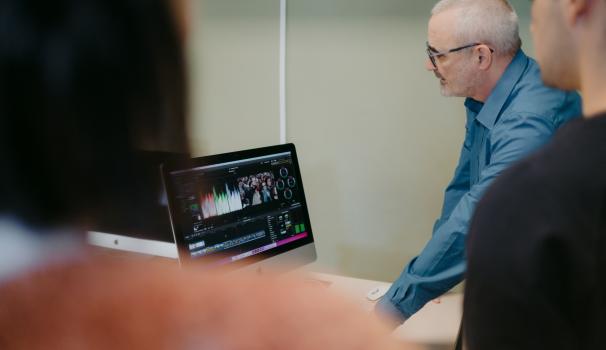
Video post-production rooms
Available for both academic work and personal projects, you will find a total of 9 audio and video post-production rooms at the school, equipped with pioneering programs such as Photoshop, DaVinci Resolve, Final Cut Pro, Premiere Pro, After Effects and Audition.
Multimedia laboratory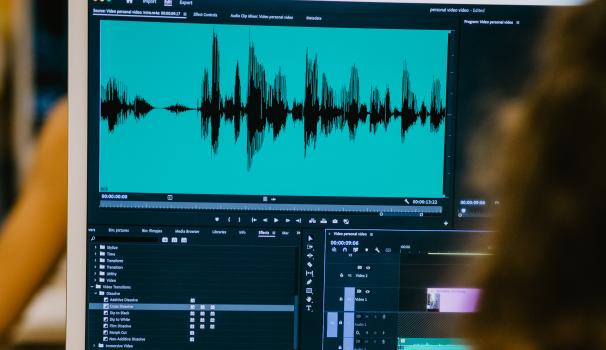
Multimedia laboratory
For any communication project, the multimedia laboratory is the perfect room to start making a creative idea or initiative a reality. The room allows reservations for team meetings.
Auditors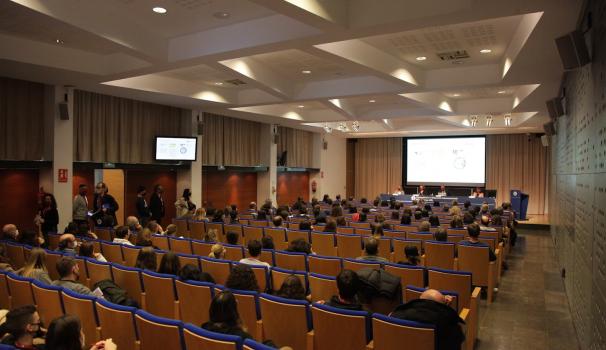
Auditors
The school has an auditorium that can be used for celebrations, academic events, conferences or activities. In addition to the school's events, the space hosts other occasions that require ample space.
Technological resources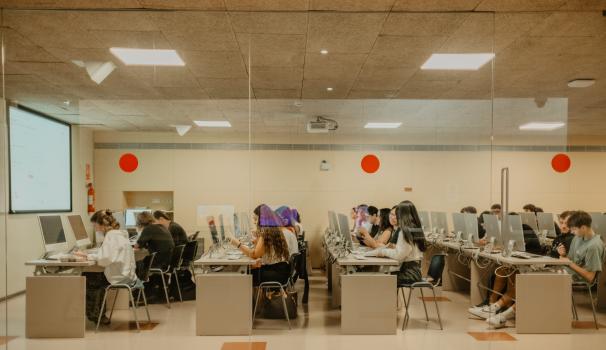
Technological resources
If you have a job or just need a computer, you can go to the computer classrooms or workspaces and use the Macs we have at your disposal.
Professional cameras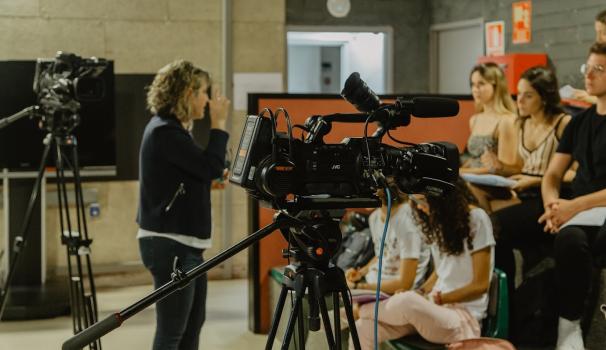
Professional cameras
Going into the world of work having been able to use professional equipment is essential. That's why we provide you with cameras that are used in the Audiovisual Communication and Journalism sectors so that you can learn with professional teams.
Camera accessories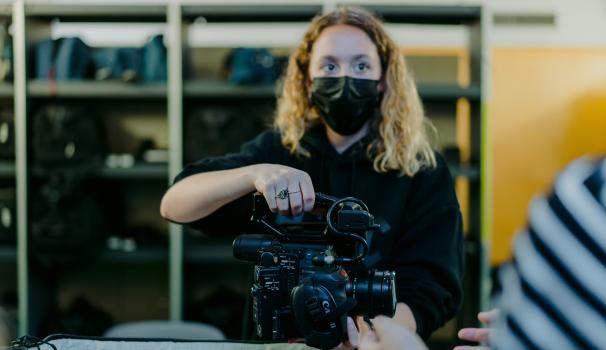
Camera accessories
You have a wide range of accessories for professional cameras to get the best results in filming. Remember that you can use it for both personal and academic projects, always making the relevant reservation in advance.
Libraries
Libraries
If you need a quiet space to study or to do individual and group work, come to the library! Each school has its own library with computers, workrooms, reading points and an extensive catalog of documents you can consult in both hard copy and digital format.
Computer rooms
Computer rooms
If you have a job or just need a computer, you can go to the computer classrooms or workspaces and use the Macs we have at your disposal.
Chapel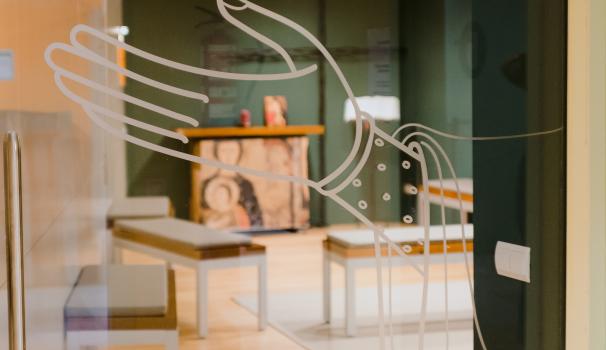
Chapel
The chapel is the right place to find recollection, peace, to focus, to pray and to celebrate the Eucharist weekly and at important liturgical moments (Christmas, Ash Wednesday and Easter). The sacrament of reconciliation is also celebrated.
Audio-visuals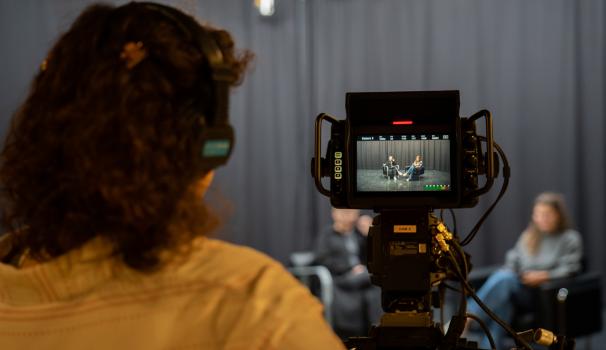
Audio-visuals
Using the latest equipment and audio-visual techniques is part of the learning process and enables students to enter the world of work with a broad knowledge of computer science. For this reason, the schools are equipped with audio-visual material for viewing and editing and a video library.
Programa de Mentoring
Programa de Mentoring
Ets estudiant o Alumni dels graus en Comunicació o del Grau en Relacions Internacionlals i tens un projecte que requereix equipament tecnològic i assessorament professional? Posem a la teva disposició el programa de mentoring, un servei per donar suport tecnològic i assessorament a aquests projectes.
ICT services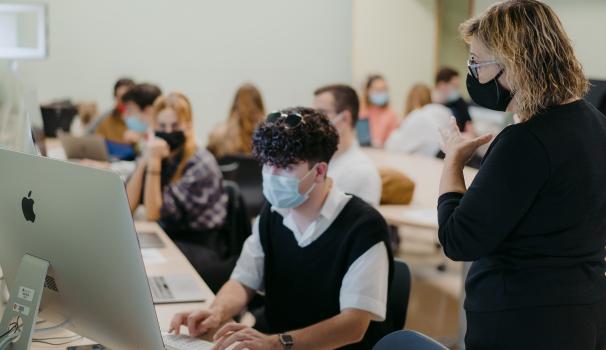
ICT services
Our facilities include Mac computers, state-of-the-art software, WiFi network and printers to provide students with all the materials they need in their learning process.
Research ethics committees
Research ethics committees
Ethics in the field of research is fundamental. The Faculty Research Institutes are supported by the opinions of the Research Ethics Committees (CER-URL) to evaluate and rate projects that have ethical implications.
Research Support Office
Research Support Office
If you are part of a research group, a professor or a PhD student and you need help with a project, you can ask for advice. This assistance includes analysis, guidance, help with applying for awards, and the financial management of projects.
Bar / Restaurant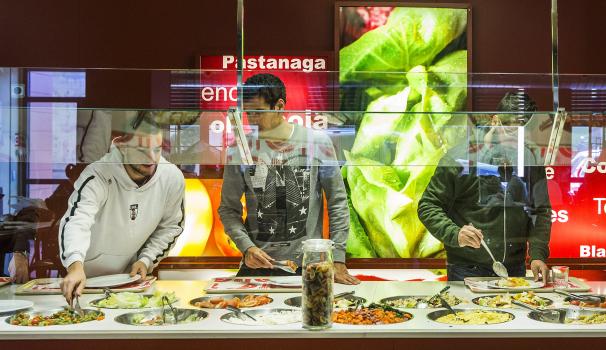
Bar / Restaurant
The nerve center of the quintessential faculties is the bar. There, teachers, students and staff meet throughout the day for breaks or meals.
Academic Secretary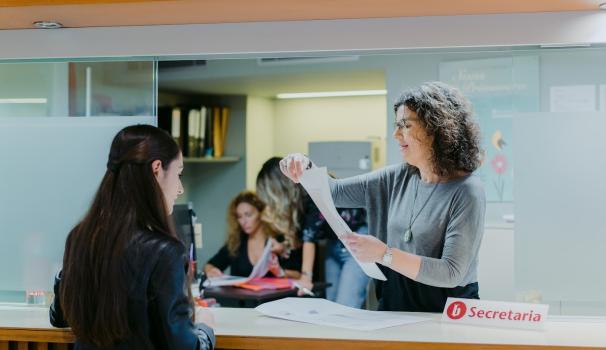
Academic Secretary
The Academic Secretaries of the Blanquerna faculties are the space for students to relate to the processes linked to the registration of official and own courses.
Student Information and Guidance Service (SIOE)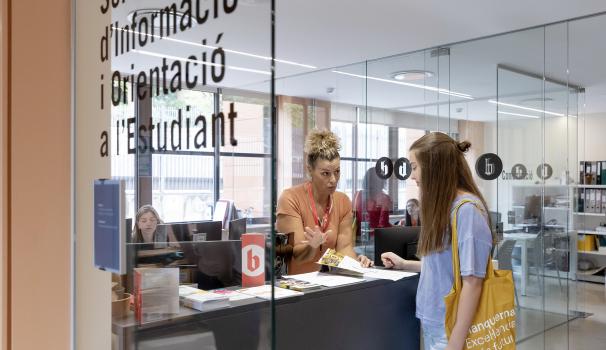
Student Information and Guidance Service (SIOE)
Would you like to receive information on pre-registration and admissions processes, scholarships and grants or validations? The SIOE is the service you need. Ask for all the information about any of these processes and discover all the possibilities at your fingertips.
Internship service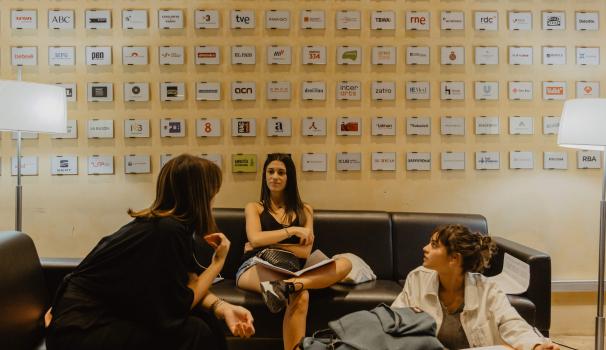
Internship service
Professional experience is a core part of our methodology. For this reason, we have a broad spectrum of internship agreements to meet the needs and preferences of all students. You will graduate having worked in your industry.
Scholarships and grants service
Scholarships and grants service
At Blanquerna, we put the future within everyone's reach thanks to our scholarships and grant service to start or continue studying at our schools. Financial aid is both internal and external to the university. You will find a wide range of possibilities.
International Mobility Office
International Mobility Office
Going abroad is a unique opportunity to discover the plurality of the world. Aware of the importance of the internationalization of studies, we have established mobility agreements around the world.
Careers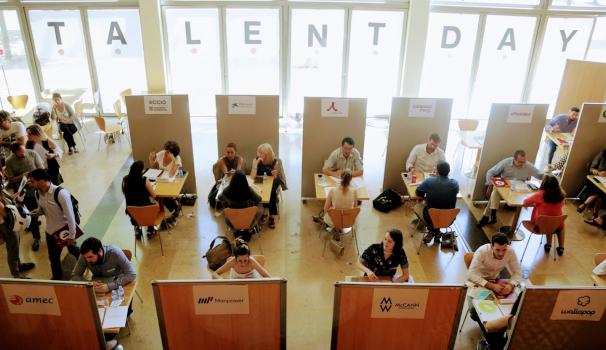
Careers
This service provides graduates with the necessary means so that they can actively participate in their professionalism and propose optimal candidates to organizations and companies looking for staff.
Job Bank
Job Bank
The leap into the world of work is always a challenge. For this reason, we provide a Job Bank for students and graduates. This service puts students in touch with companies and institutions looking for staff.
Social Commitment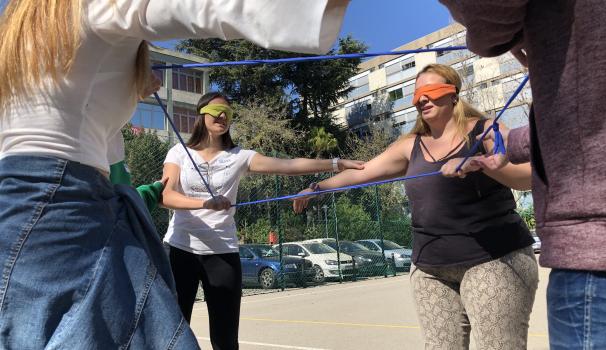
Social Commitment
Solidarity and the struggle for human dignity are values that identify us. Social Commitment is a volunteer program that our students can join to participate in projects in the Third and Fourth World.
Alumni service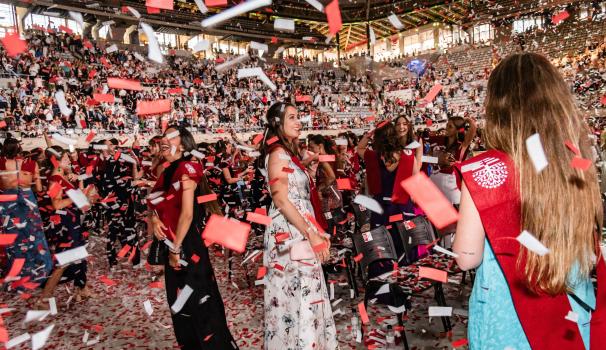
Alumni service
Studying in Blanquerna allows you to be part of our community. Being a college student opens the door to a lot of options for continuing your vocational training beyond your time in the classroom.
Sports service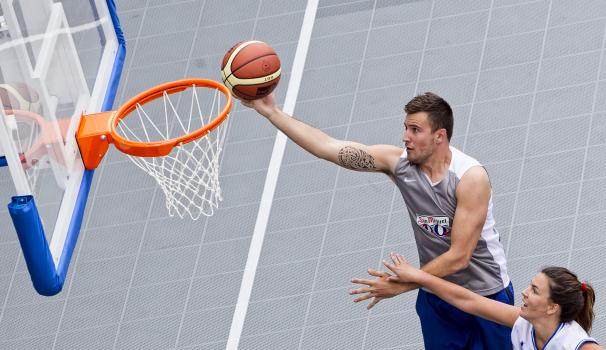
Sports service
Want to represent the URL in college sports tournaments? You can find a wide range of possibilities for both individual and team sports. To be a student of Blanquerna, you will have a discount at the Can Caralleu and La Salle Sport & Fitness sports complexes.
Personal Guidance Service (SOP)
Personal Guidance Service (SOP)
If you are in a difficult situation in the academic, personal or social field, you can request, free of charge, the personalized attention of the SOP. This is an interdisciplinary team of professionals who will guide you in dealing with the situation.
Faith and Spirituality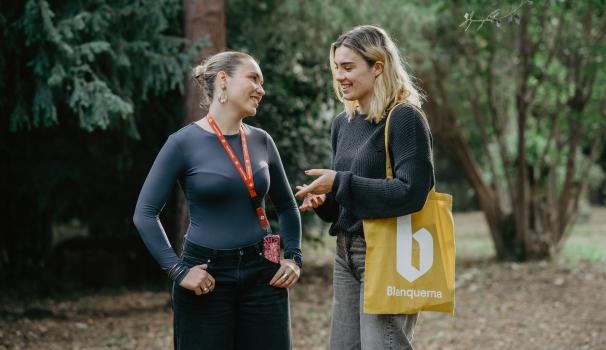
Faith and Spirituality
In the three Blanquerna faculties, you will find spaces for reflection isolated from the hustle and bustle dedicated to the celebration of the Faith or cultural and religious animation. If you wish, you can also receive personalized attention and information about church life.
Diversity support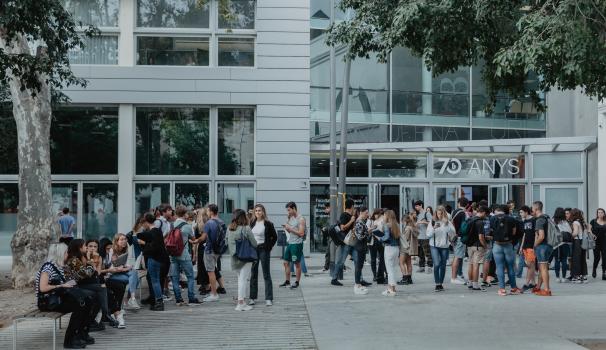
Diversity support
At Blanquerna we promote personal development at all levels to people with a diversity of specific needs from a normalizing context that encourages personal autonomy and uniqueness.
Blanquerna Choir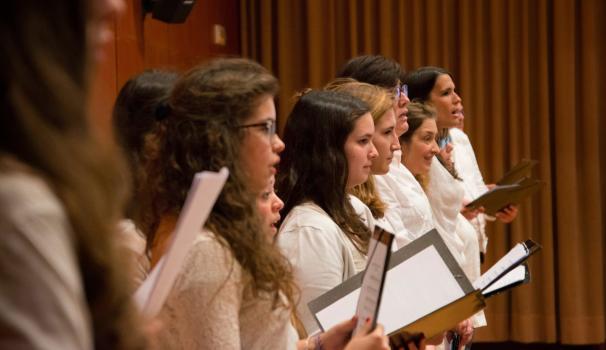
Blanquerna Choir
If you like music and want to take part in the concerts of institutional events and festivities, sign up for the Blanquerna Choir. There you will meet new friends and enjoy music.
Blanquerna Symphony Orchestra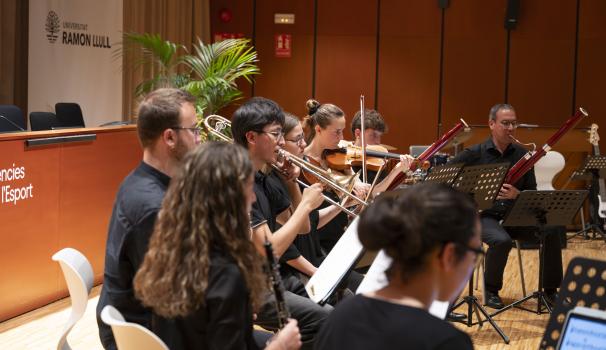
Blanquerna Symphony Orchestra
If you play a string instrument (violin, viola, cello, double bass…), a wind instrument (oboe, clarinet, bassoon, French horn, trumpet, trombone, tuba…), or percussion (timpani…), join us! And don’t worry — if you play another instrument (saxophone, drums, flugelhorn…), you’re also welcome to audition!
Student representatives
Student representatives
Each class group must elect a representative to put forward concerns or make proposals to the faculty members and academic management. At the same time, each degree must appoint a delegate and each school a representative on the general URL council.
Student Council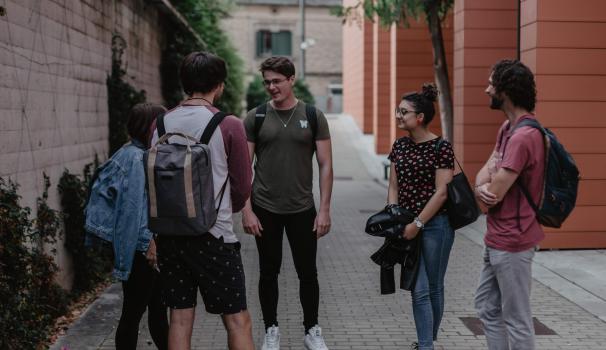
Student Council
Contact between students and the university is constant and is channeled through the Student Council, the body that collects proposals and requests from students and facilitates university life.
Language support service
Language support service
Are you studying a foreign language and want to improve your level? Do it at your own pace in the language self-learning classroom. This service offers various teaching resources and materials to practice the language.
Anti-harassment Point
Anti-harassment Point
We’re here to listen! Have you experienced or witnessed any situation of harassment? Do you have any questions about Blanquerna’s equality policy? Would you like to make a proposal or suggestion regarding gender issues? Use this Anti-harassment Point: write to us through the channels you’ll find at the bottom of this page.
Members of the Council

Montserrat Arbós Figueras
Onno Gerard Hubert Seroo
Coordination
Sandra Balsells Cubells
Mercè Kirchner Baliu
Valentina Laferrara
Mariona LLoret Rodà
Xavi Martí González
Faculty
Asya Abdulhafiz Nasrula

Raghida Abillamaa Hamouche
Javier Albarracin Corredor
Cristian Marc Alegre Antón
Diana Al-Rahmoun Font
Lluís Anyó Sayol
Sue Aran Ramspott

Inés Arco Escriche
Gema Aubarell Solduga
Sonia Ballano Macías
Hugo Jordi Ballón Marco-Bach
Serena Rachel Barkham
Valeria Bello
Jaume Benet Busquets
Alain G.F. Blomart
Ignasi Boada Sanmartín

Laia Bonals Ruiz
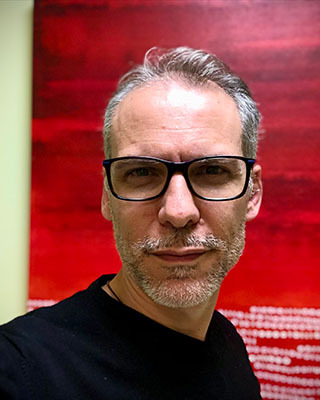
Joan Bosch Garcia
Jordi Botey López
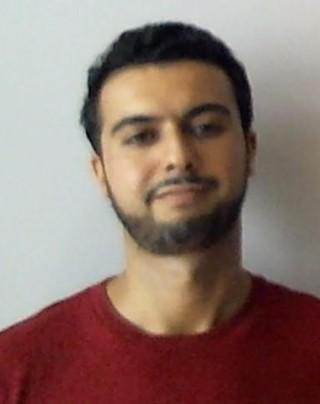
Moussa Bourekba
Jordi Busquet Duran
Jorge Calvo Rufanges

Francesc Canosa Farran
Juan Pablo Capilla Garcia

Albert Caramés Boada
Joan Joaquim Carreras Goicoechea
Xavier Casals Meseguer
Antoni Castells Talens
Craig Christopher Collins
Juan Cuenca Fontbona

Maria Cuso Serra
Sergi Cutillas Marquez

Andrea Daza Tapia

Fernando de Felipe Allué
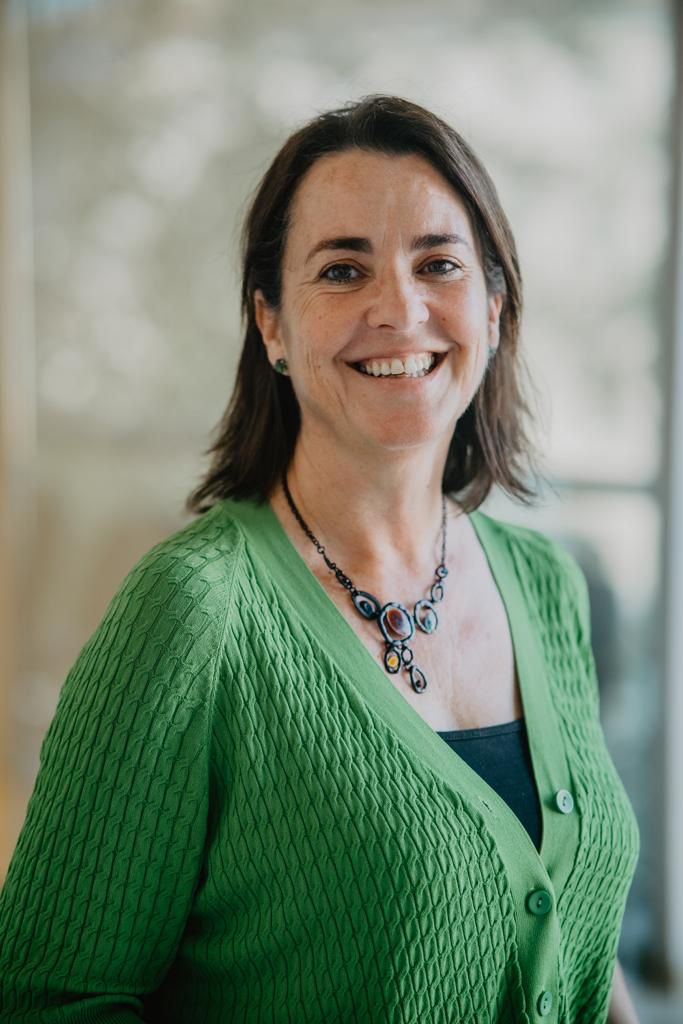
Sonia de Jaime Rodríguez
Rafael De Ribot Torrella
Ferran De Vargas Diaz del Rio

Míriam Díez Bosch

Núria Escalona Nicolas
Roger Esteban Mondaray

Clàudia Esteruelas Sardó

Glynn James Euston
Mayka Fernández López
Carles Fernandez Torne
Agustín Fernández de Losada Passols

Ramon Maria Fondevila Guinart
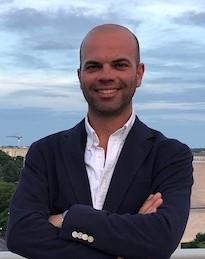
Miguel Franquet Dos Santos Silva
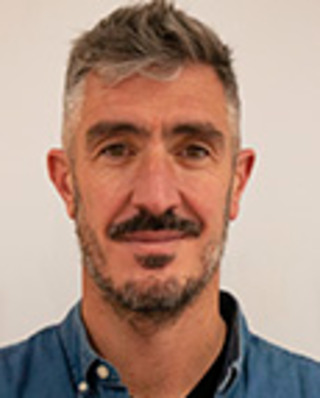
Uri Garcia Medalla
Iván Gómez García
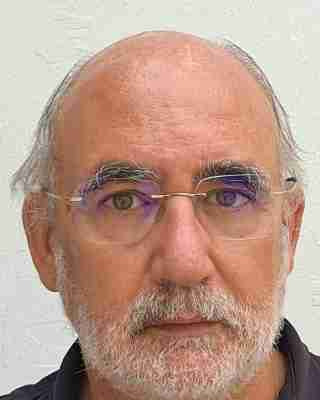
Francesc Grané Terradas

Jonathan Green

Federico Guerrero Cabrera

Hiba Hassan

Alexander Heichlinger
Diane Hoyle
Ricardo Iscar Álvarez
Oriol Izquierdo Llopis
Juan Ramón La Parra Martínez

Carlos Lamelo Valera
Montserrat Llussà Masdéu
Tianling Lu
Elizabeth Mathilde Marie
Marta Marín Anglada
Oriol Massegú Blanch
Oscar Mateos Martin
Alfonso Medina Cambrón
Mònica Mestanza Garcia
Ramon Millà Bruch
Esteve Miralles Torner

Carlos Monte Salvador
Gemma Morató Sendra
Bartolomé José Moya Olives
PILARMS Muro Sans

Tony nagéra de Sousa
Anna Maria Nogué Regàs

Marie-Hélène Nuc

Tracey Jane Owen

Roger Pallarés Sastre
Lluís Pastor Pérez

Estelle Sylvie Pautel
Jaume Peris Llimona
Ronald Wayne Pfeil Stackpoole
Josep Maria Picola Meix
Patricia Plaja Pérez
James William Pownall Graumann
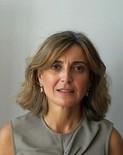
Eva Maria Prada Garrido

Cristina Puig Vilardell
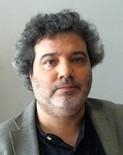
Jaume Radigales Babí
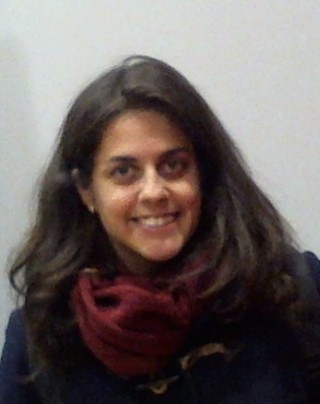
Alba Ramírez Pagès
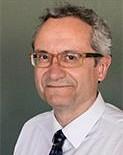
Carles Riera Fonts
Marc Roig Badia
Enrique Jose Roig y Velasco
Raül Romeva Rueda
Marc Rosado Salvador

Ivan Rosquellas Carrion
Claudia Saba
Alba Sabaté Gauxachs

Joan Sabaté Salazar
Ferran Sáez Mateu
Sílvia Sáez Sánchez
Josep Sala Colom
Aníbal Salazar Anglada
Jordi Sànchez Torrents
Josep Vicent Sanchis Llàcer
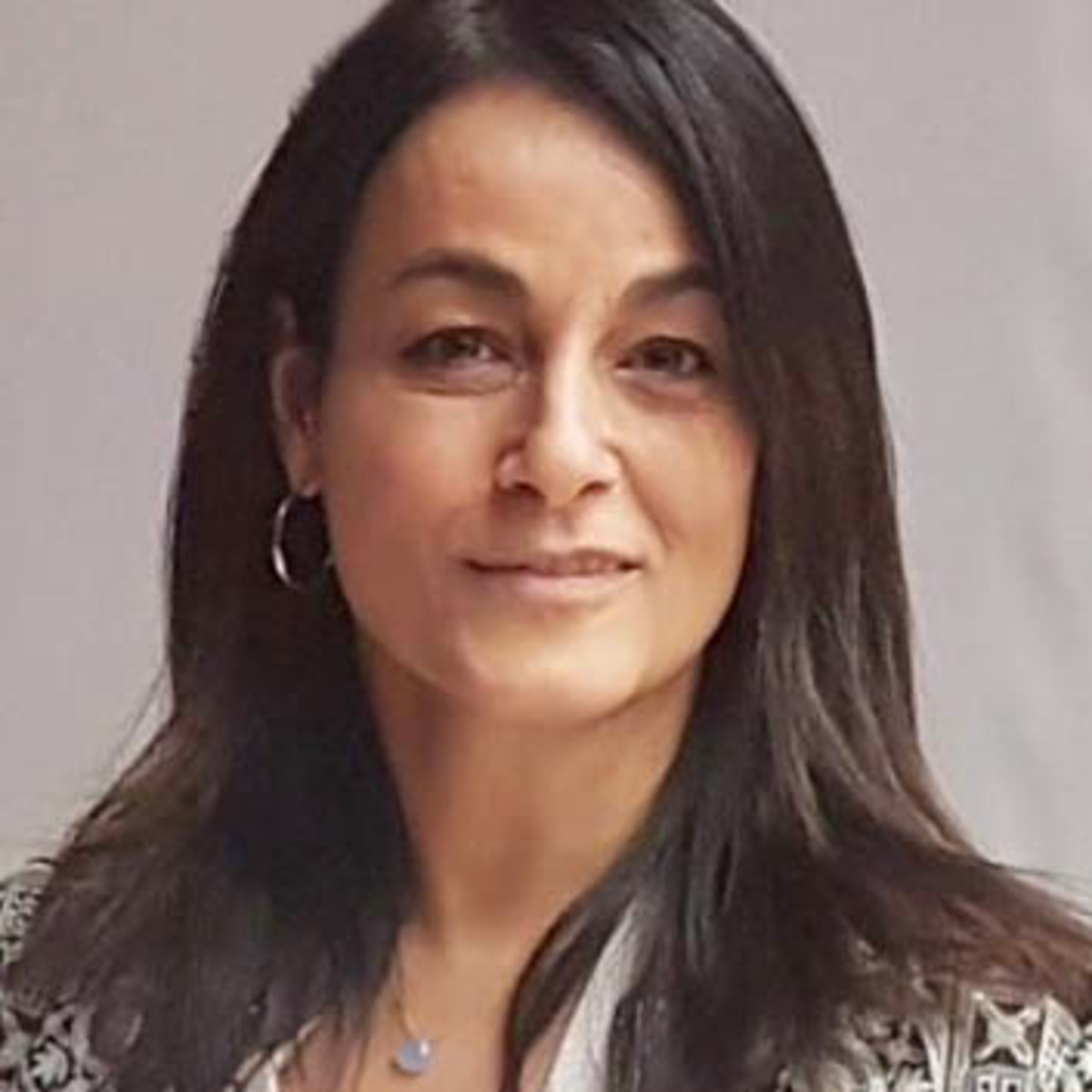
Eva Santana López

Enrique Schonberg-Schwarz Letzen

Jordi Serra del Pino
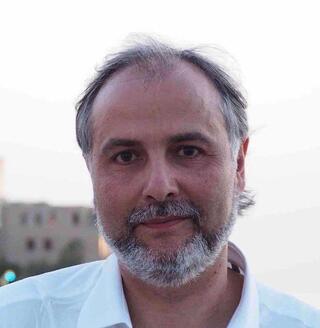
David Serrano Blanquer
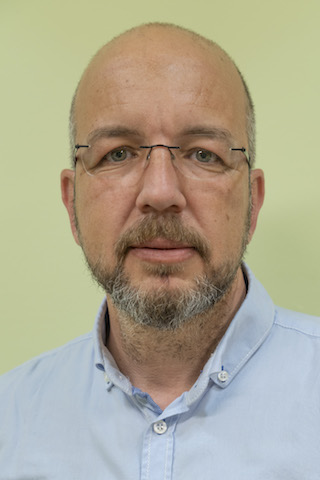
Marçal Sintes Olivella

Jaume Suau Martínez
Joan Tharrats Pascual

Andreu Torner Jolonch
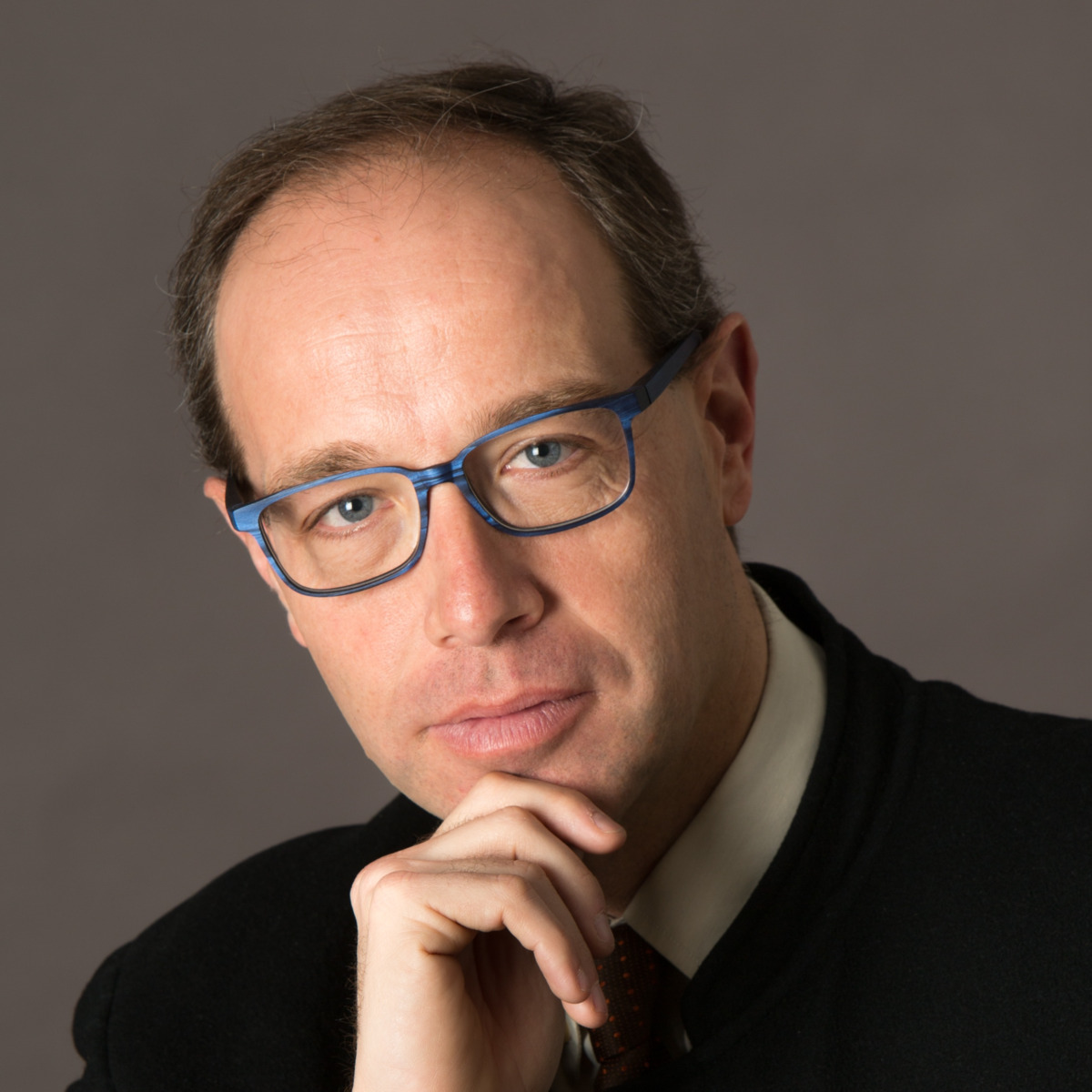
Francesc Torralba Roselló
Jordi Urgell Garcia
Francesc Jesús Viadel Girbés

Lourdes Vidal Bertran
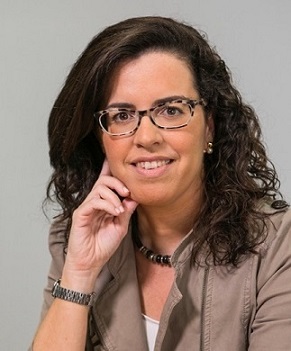
Sandra Vilajoana Alejandre

Francesc Vilallonga Montaña
Elisa Vivas Soto
Aurelia Anne Katia Volsy
Jennifer Weiss
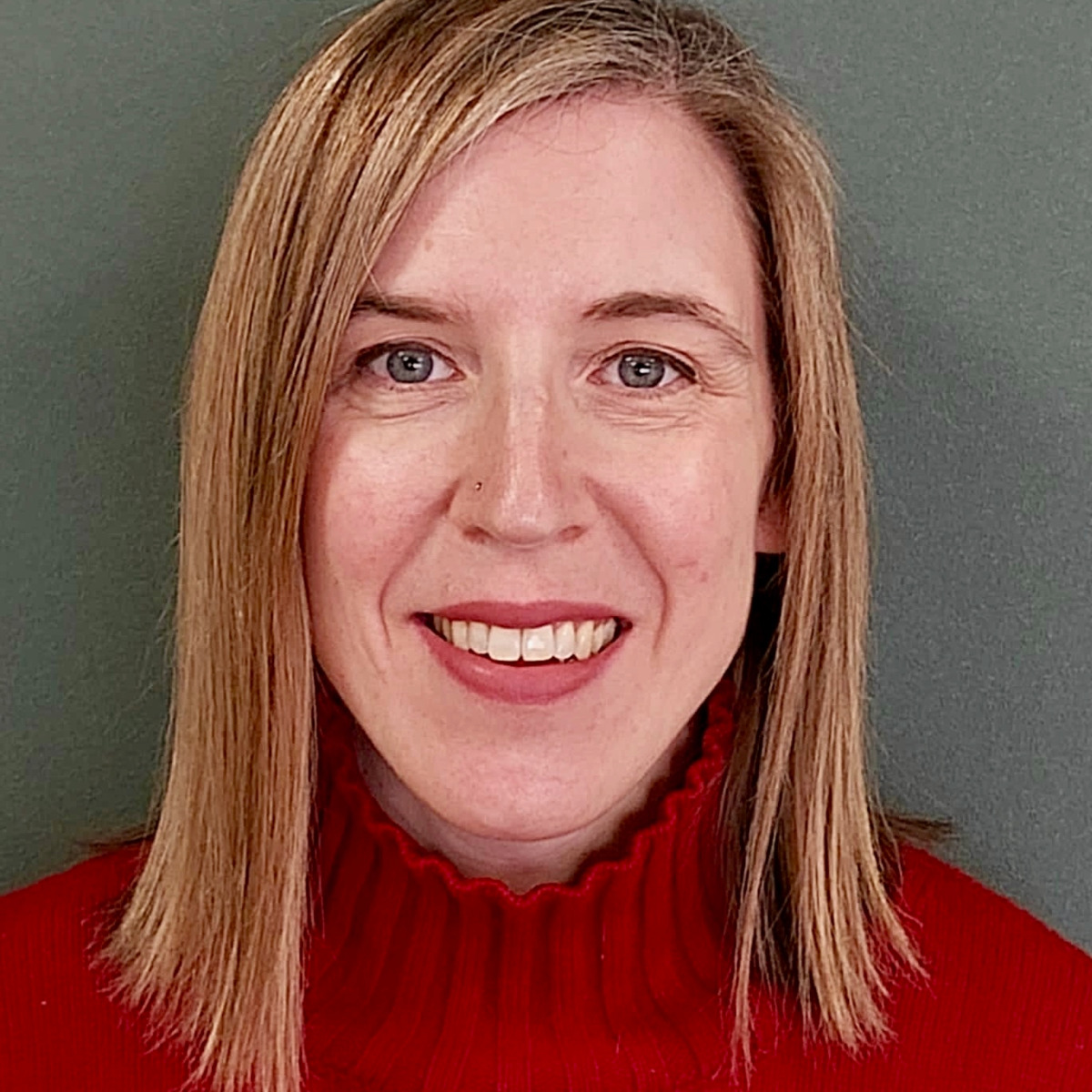
Ursula Frances Wolf
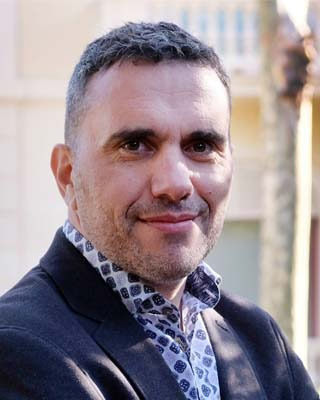
Enric Xicoy Comas
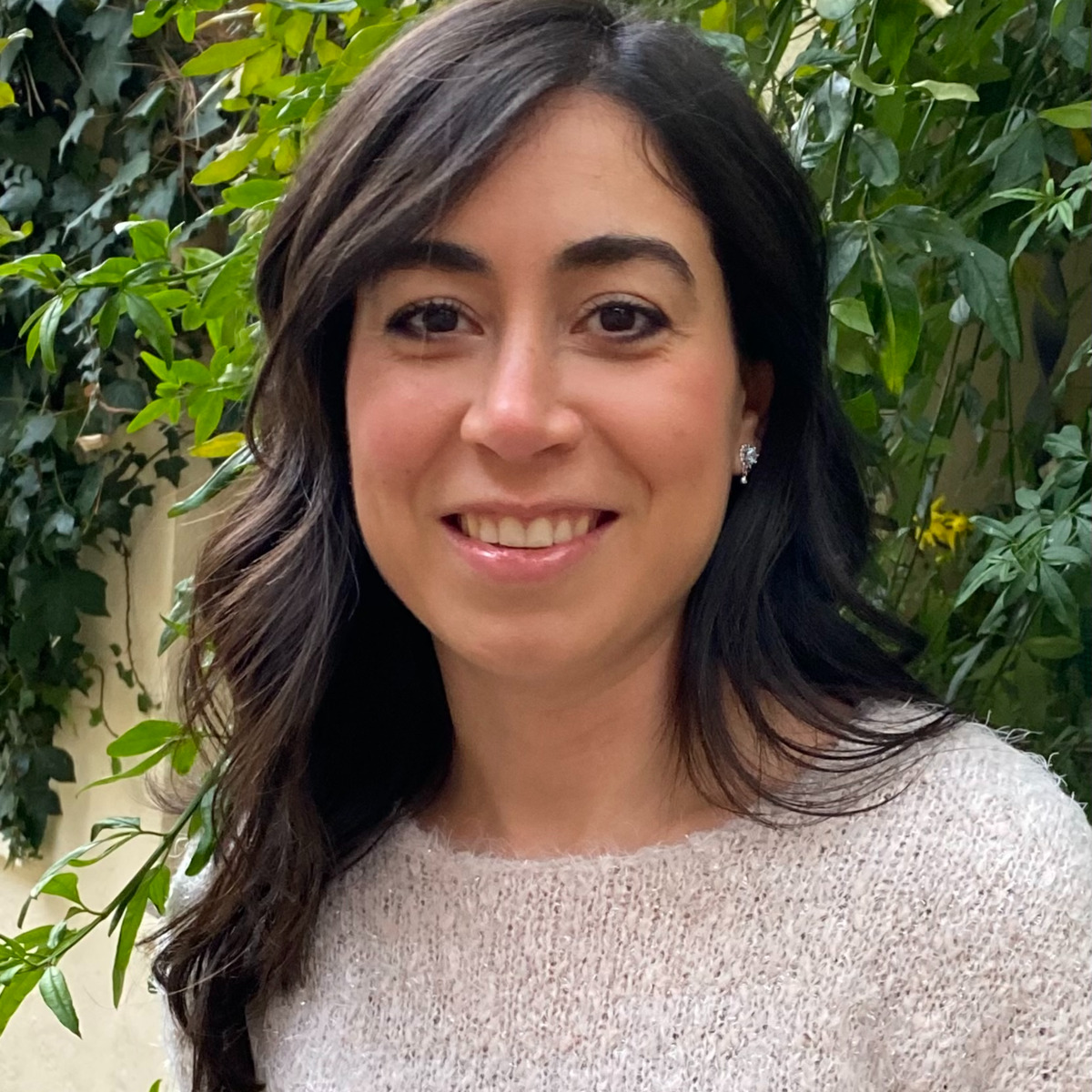
Elena Yeste Piquer
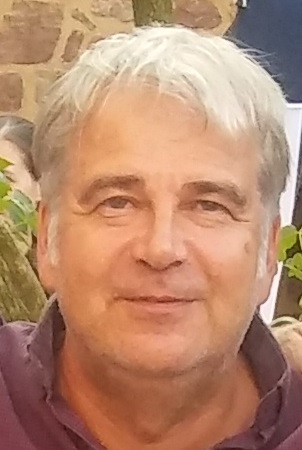
Klaus Zilles







080 Barcelona Fashion (CCAM) · 20 Minutos · 8TV · ABACUS · ABC · Abertis Telecom · · Action Against Hunger · Actimundi · ADM · Aerolink Air Services S.L. · Agència Catalana de Cooperació al Desenvolupament · Agència Catalana de Notícies · Agencia EFE · Barcelona City Council · Sant Cugat City Council AKI · ALESPORT (Solo Motor, Solo Bici, Solo Auto 4x4...) · AMEC · Antena 3 · Aportada · ARA · Arenalia Comunicación y Eventos S.L. · Archbishopric of Barcelona · Associació Cultural Castell de Perelada · Avellaneda · Banc de Sabadell · Banc de Sang i Teixits · Barça TV · Barcelona Activa · Bason Image · BEATRIZ FUREST S.L. · BeIN Sports · Bodas.net (WEDDING PLANNER S.L.) · Bombers de la Generalitat · BPMO Edigrup · Brand Comunicación · BTV · Cadena COPE · Cadena SER · Caixa Capital Risc · Spanish Chamber of Commerce in the Philippines · Sabadell Chamber of Commerce · CAN Europe · Canal Reus TV · Canal Terrassa Vallès · Cáritas Diocesana de Barcelona · Casa Africa · Casa Amèrica Catalunya · Casa Àsia · Catalunya Ràdio · Center for Cooperation in the Mediterranean · Centre Delàs d’Estudis per la Pau · Centre Internacional Escarré per les Minories Ètniques i Nacionals (CIEMEN) · CIDOB · Circuit de Catalunya · Citizens-Citizenship Party · · UCLG United Cities and Local Governments · Club Joventut Badalona · Clubs DIR · Barcelona College of Pharmacists · Concept Agency · Consell Català del Moviment Europeu · Contraseña Produccions · CORPORACIÓN DIVABE · CREATEL · Spanish Red Cross in Catalonia · Spanish Red Cross in Catalonia · Cugat.cat · Cuotech · DAMM · Deloitte · Deloitte · Education Department. Generalitat de Catalunya · Department of Foreign Affairs - Generalitat de Catalunya · Department of the Interior - Generalitat de Catalunya · Department of the Presidency. Generalitat de Catalunya · Department of the Presidency - Generalitat de Catalunya · Deustche Bank · Diari de Sabadell · Diari de Terrassa · DIGITAL MEDIA CONSULTING SL · DKV Seguros · Dorna Sports · EDICIONES ADG SL (Novias España, Novias de Pasarela...) · Ediciones JD · Editorial Planeta · Editorial Reverté · El 9 Nou · El Món · El Mundo · El Mundo Deportivo · El Nacional.cat · El País · El Periódico · El Punt Avui · El Temps · EL TERRAT DE PRODUCCIONS, SL · Enderrock · Equipo Singular · Esade · Esiete · Eupportunity · Euroleague · Europa Press · Expansión · Catalan Basketball Federation · Catalan Social Volunteering Federation · Catalonia-La Pedrera Foundation · Fundació Futbol Club Barcelona · Fundació La Caixa · Fundació Privada Casa Amèrica Catalunya · Futbol Club Barcelona · Gas Natural · GEA Barcelona European Consulting · Giny Comunicació · Global Editors Network · Global Socio Economic Forum Secretariat · GOL TV · Gomplast · Gremi Hotels de Barcelona · Grup Flaix, S.L. · Havas Media · Hill and Knowlton España · Hospital Arnau de Vilanova de Lleida · Hospital de Bellvitge · Hospital Sant Joan de Déu · Hospital Vall d'Hebron · IB3 · IEMed · Catalan Institute of Health · European Institute of the Mediterranean · Instrategies · InterMèdia Grup de Comunicació · International Policy Sector Action Plan · ISGlobal · IT Comunicación · Justícia i Pau · Justícia i Pau · Kreab Iberia · L'Esportiu · La Fábrica de la Tele, S.L. · La Grada · La Razón · La Salle · La Seca-Espai Brossa · La Vanguardia · La Voz de Galicia · La Xarxa · Le Mot Project · Lewis Communications · Lleida Televisió · Luxury Spain · M1 TV · Mahala Comunicació i Relacions Públiques · Mataró Ràdio · McCann Erickson · Media Planning Group · Mediapro · Doctors Without Borders Spain · Memondo Network · Menshealth · Mercat de les Flors · Metropolis · Minoria Absoluta · Mola Mola Surf S.A. · MSA The Safety Company · Egyptian Museum of Barcelona Nació Digital · Nao Cinematogràfica · Natura Selection · Neomoda · Network of Regional Governments for Sustainable Development · Onda Cero · ORU FOGAR · Otaduy · Oxfam Intermón · Parlament de Catalunya · PEN International · PIMEC · Prensa Motor · Prisma Publicaciones 2002 · Promoturist · Pronovias · Proset · RAC1 · Ràdio Estel · Ràdio Marca · Ramon Clemente S.A. · RNE · Rosa Clará · Rosaud Costas Duran · RTV Vilafranca · SEAT · Sónar · Space Ibiza Planet · SPAMEX - Associación Instituto Iberoamericano de Mobilidad Internacional · SPORT · Swarovski ibérica · Teatralnet · Teatre Nacional de Catalunya · Tekman Books · Telecinco · Territorio Creativo · Thomas Cook International AG · Time Out · Tinkle · Tornos Abogados · Tous · TV3 · TVE · UNICEF - Catalonia Committee · Value Retail Management La Roca · VECTOR 5 · Vice · Vilaweb · Vitamine Communications · Wallapop · Woman · XXL Comunicación · Zicla
RELATED PROGRAMS