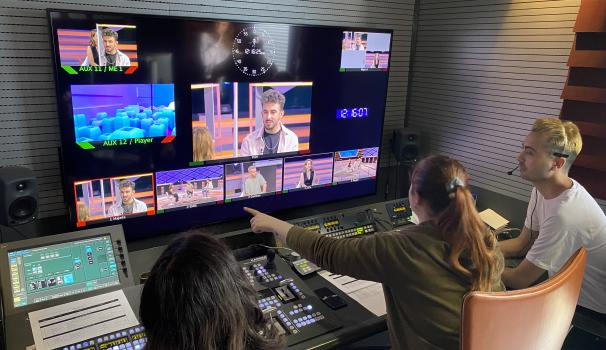
Journalism in all types of channel: television, press, radio and digital media.
- Home/
- Dual degree in Journalism and Corporate Communication and Audio-visual Communication
Dual degree in Journalism and Corporate Communication and Audio-visual Communication
Enrolment open
- ModalityIn-person
- LanguagesCatalan, Spanish
- Duration5 years
- DateSeptember 2026
- Location
Blanquerna-URL - Plaça Joan Coromines. 08001 Barcelona
- Faculty
School of Communication and International Relations
Who is it for?
Studying the Double Degree in Journalism and Corporate Communication and Audio-visual Communication at the Blanquerna School of Communication and International Relations in Barcelona is a great opportunity for students who wish to gain the skills and knowledge needed to succeed professionally in the field of communication.
The theoretical and practical training in both specialties gives the student access to a wide range of professional options: media, television, cinema, platforms, new digital media and corporate communication departments.
Audio-visual communication has strong social and business roots and is playing an increasingly significant role in our society. This double degree offers numerous professional and creative opportunities in an expanding sector with a great future.
Great scope for professional growth
The extensive experience of the School's teaching staff and their permanent contact with professional activity allows us to constantly adapt the content of the course to changes in the digital and mobile ecosystem. At Blanquerna-URL, we teach journalists, communication, cinema and television professionals to the highest standards, with a solid humanistic training, developing the specialized skills which are most in demand in the market:
Creation of content and communication strategies for companies and institutions.
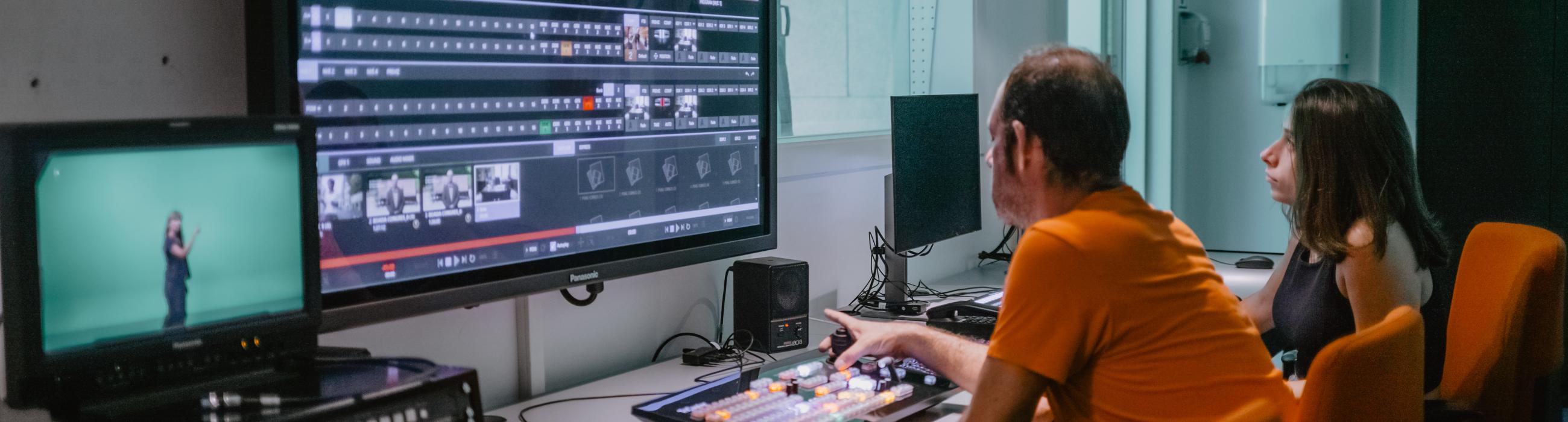
You will learn how to create all kinds of audio-visual products. You will learn how to carry out an idea to make it succeed, starting with planning, filming, and post-production.
You will know how to prepare everything involved in creating the audio-visual product to make it successful. We will teach you how to look for funding, how to hire technical and artistic staff, how to organize a shoot, and how to distribute and disseminate your product nationally and internationally.
We will teach you how to create the dialogues, scenes, and sequences of the audio-visual product. You will understand its production mechanisms, and we will give you the necessary tools to transform your ideas into a full script.
If you choose the Double Degree in Journalism and Corporate Communication and Audio-visual Communication, you are choosing...
A guaranteed future career.
- Professors working in the sector: renowned professionals.
- An extensive network of companies for internships.
- High employment rate
- Scholarship Program.
- International outreach: agreements with universities and companies.
- Innovative, constantly renewed technical equipment for student use.
- Rigorous, high-quality humanistic tuition (two years in common with the bachelor degrees in communication).
- Seminars: small groups, close contact and student tutoring program.
- High employment rate
- Alumni: Network of former students for professional contacts around the world. Professional chapters for network communication.
Specializations
Journalism and Corporate Communication
The course provides students with the skills and knowledge to successfully join the professional communication sector, either in the media or in companies, government bodies and other organizations, where corporate communication plays an increasingly important role.
Audio-visual Communication
In a rapidly changing professional field where knowledge is constantly developing, the Bachelor Degree in Audio-visual Communication trains you to respond to the demands of the audio-visual sector.
The student will learn about the specialized areas of each of the degrees:
Blanquerna methodology
The Blanquerna methodology is a distinctive way of understanding university learning: personalized, relational, experiential, and connected to professional and social reality. It combines close guidance and work in small groups, simulations and professionalizing experiences, learning situated in social contexts, and the connection between disciplines, courses, degrees, and professions. In this way, students build meaningful knowledge and develop the competencies needed to engage with a complex and changing world.

Study for a double major
Study for two majors simultaneously, consecutively or following a track tailored to you
News

May 28, 2021

April 11, 2019

March 8, 2019
September 28, 2018
Students from abroad
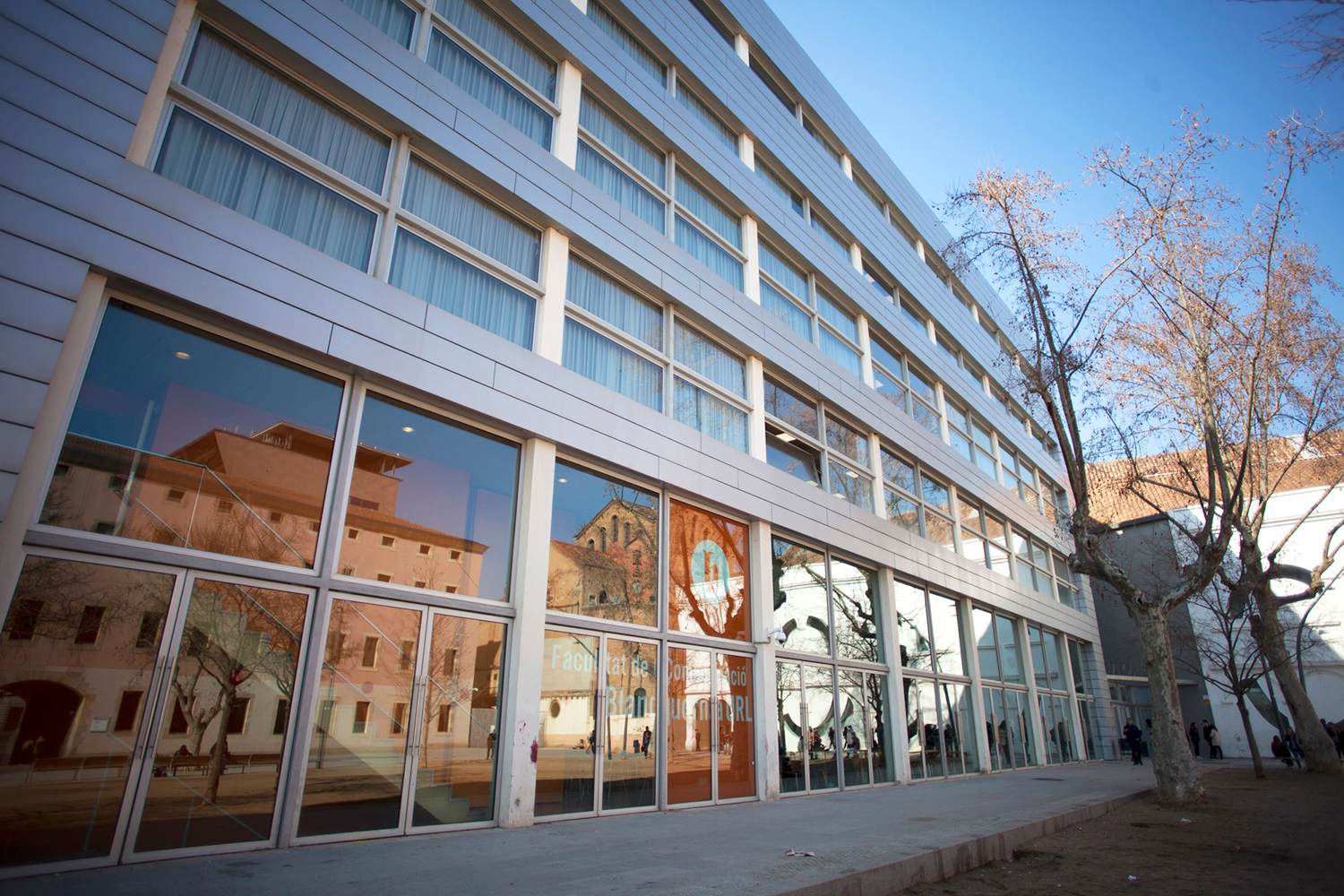
Blanquerna is a university with an international vision. Every year, we welcome students from all over the world wishing to study a full bachelor degree at our center. You could be among them.
Academic information

| Subject | Credits | Academic type | |
| First semester | |||
| Theory of Communication and Information | 6 | Core curriculum | |
| General Sociology | 3 | Core curriculum | |
| History of Contemporary Thought | 6 | Core curriculum | |
| Language I. Catalan Language | 3 | Core curriculum | |
| Language II. Spanish Language | 3 | Core curriculum | |
| English 1 | 3 | Compulsory | |
| Seminar I. Introduction to Communication | 8 | Core curriculum | |
| Second semester | |||
| Language and Techniques in Image and Sound | 3 | Compulsory | |
| Information Management | 4 | Compulsory | |
| Sociology of Communication | 3 | Core curriculum | |
| Aesthetics | 4 | Compulsory | |
| Language III. Text Types | 3 | Core curriculum | |
| English 2 | 3 | Compulsory | |
| Seminar 2. Narration | 8 | Core curriculum |
| Subject | Credits | Academic type | |
| Third semester | |||
| Introduction to Advertising, PR and Marketing | 6 | Core curriculum | |
| Introduction to Journalism and Corporate Communication | 6 | Core curriculum | |
| Introduction to Audiovisual Communication | 6 | Core curriculum | |
| Contemporary Political and Social History | 3 | Compulsory | |
| English 3 | 3 | Compulsory | |
| Seminar III. Professional Communication | 8 | Compulsory | |
| Fourth semester | |||
| Audiences and Markets | 3 | Compulsory | |
| Theory and History of Journalism | 3 | Compulsory | |
| Basic Principles in Design | 4 | Compulsory | |
| Seminar IV. Integral Management of Communication | 8 | Compulsory | |
| History of Cinema | 4 | Compulsory | |
| Narrative of Audiovisual Genres | 3 | Compulsory | |
| 3 | Compulsory | ||
| New Media | 3 | Compulsory | |
| Introduction to Economy | 4 | Compulsory | |
| English 4 | 3 | Compulsory |
| Subject | Credits | Academic type | |
| Fifth semester | |||
| Corporate Identity and Culture | 3 | Optional | |
| Audiovisual Production | 3 | Compulsory | |
| Fundamentals of Script Writing | 3 | Optional | |
| Cinematographic direction | 4 | Compulsory | |
| Communication Law | 4 | Compulsory | |
| English V | 3 | Compulsory | |
| Seminar V: Specialisation in Audiovisual I | 8 | Compulsory | |
| Sixth semester | |||
| Digital Content Management | 3 | Optional | |
| Applied Script | 3 | Compulsory | |
| TV Editing | 3 | Optional | |
| Development of Audiovisual Projects | 3 | Compulsory | |
| External Interships | 12 | Practicum | |
| Seminar VI: Specialisation in Audiovisual II | 8 | Compulsory |
| Subject | Credits | Academic type | |
| Seventh semester | |||
| Final Degree Project I | 6 | Final degree project | |
| Seminar VII: Audiovisual Products and Formats I | 8 | Compulsory | |
| English VI | 3 | Compulsory | |
| Writing Genres and Formats | 3 | Compulsory | |
| Radio Genres and Formats | 3 | Compulsory | |
| Audiovisual Genres and Formats | 3 | Compulsory | |
| Seminar V. Skills and Competences for Production I | 8 | Compulsory | |
| Eighth semester | |||
| Photojournalism | 3 | Optional | |
| Development of Projects | 3 | Compulsory | |
| External Internships | 12 | Practicum | |
| Seminar VI. Skills and Competences for Production II | 8 | Compulsory | |
| Sound Captation and Techniques | 3 | Optional | |
| Final Degree Project II | 6 | Final degree project | |
| Seminar VIII: Audiovisual Products and Formats II | 8 | Compulsory |
We make it easy, so you can choose whatever you want to study
Course fees are paid in installments without any interest. At the time of enrollment, 50% of the total cost of the credits for which the student is enrolled must be paid*; the remaining 50% is split into nine monthly installments (from October to June) payable by direct debit.
The tuition fee / credit of degrees is regularized each academic year for all courses.
Tuition fee for the 2026–27 academic year
Journalism and audio-visual communication, information and entertainment
The double bachelor's degree has a broad career path, with a highly diverse range of career opportunities both in the media and in companies and institutions.
Journalism

They are the journalists in charge of teams working for newspapers, television channels and audio-visual production companies, radio stations and programs. The media can be divided into subject areas such as international, politics, economics, technology, culture and sports, among others, led by journalists.

The media can be divided into subject areas such as international, politics, economics, technology, culture and sports, among others, led by journalists.
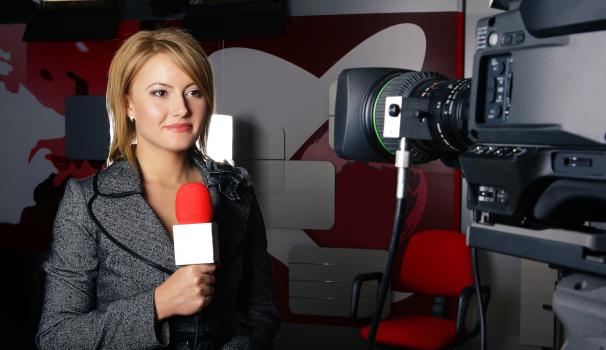
To host and present news and entertainment programs on television.

Reporting previously obtained and verified information is essential to journalism.

A TV reporter is a professional journalist.

The audio world, both radio and digital, with podcasts, is experiencing a peak.

Ensuring news coverage from different parts of the world is absolutely necessary.
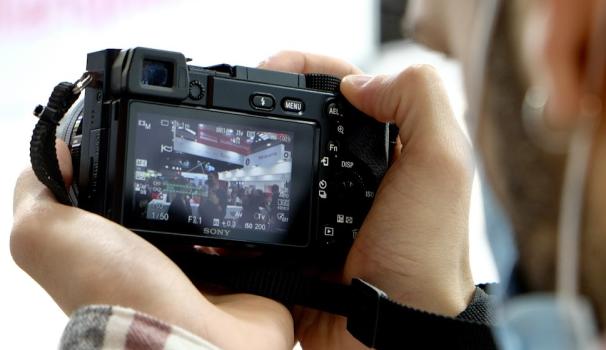
Photojournalists play an essential role by showing reality in images.

The media increasingly demand more and more professionals with digital talent to develop content for platforms and social networks.

Design, layout, infographics and data visualization are among the roles of the journalist.

The growing sensitivity to equality between people has brought about the creation of the figure of gender editor.

Writing opinion pieces is part of the journalist's work.

Journalists also work in verification teams to combat disinformation.

Audio-visual communication

To develop the creative and technical processes used to construct audio-visual fictional and documentary narrative with a distinctive approach.

To apply narrative and aesthetic construction tools to create projects, the first step in the conception of all audio-visual formats, both fiction and non-fiction.
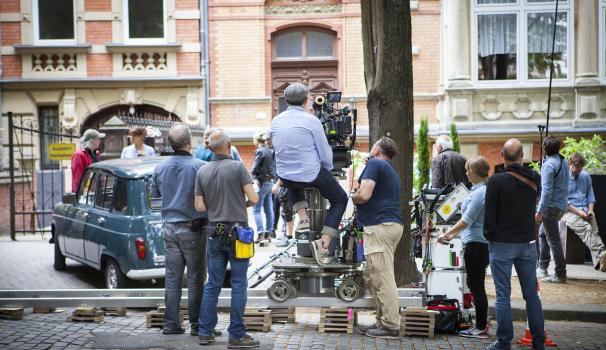
To undertake and coordinate audio-visual projects in different formats, managing talent, funding, and equipment in order to execute them according to the profile and demands of the audio-visual sector.

To develop the creative and technical processes used in scenography and create the visual identity of audio-visual content.

To develop creative and technical processes (camera work and lighting) for the images used in audio-visuals.

To develop creative and technical processes for sound recording and post-production.

To develop the creative and technical processes used to introduce structure and rhythm in fiction and non-fiction.
Hosting and presenting programs

To develop creative and technical processes to construct audio-visual narrative in TV fiction.
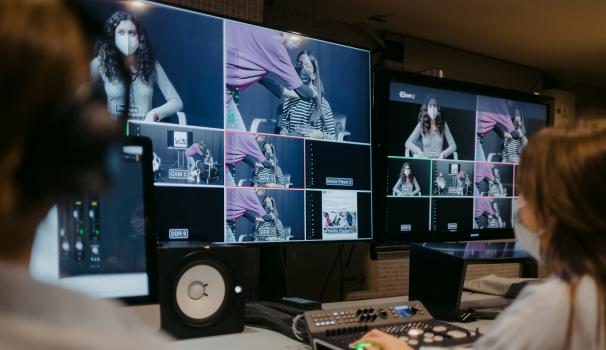
To develop creative and technical processes to construct audio-visual narrative in TV entertainment.
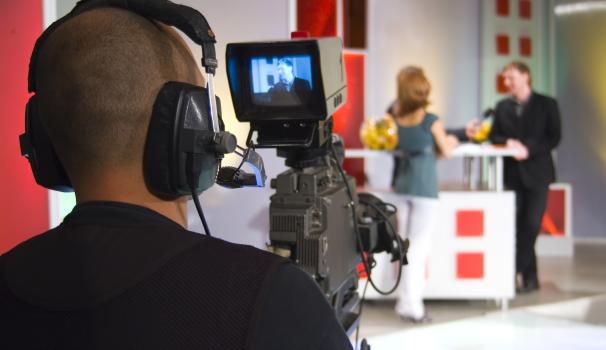
To develop creative and technical processes for directing audio-visuals linked to the world of advertising.
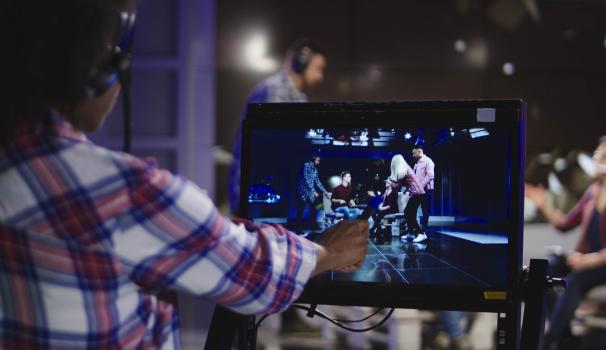
To develop creative and technical processes for directing audio-visuals intended to promote the music sector.

To develop creative and technical processes for directing audio-visuals linked to the world of fashion.

Members of the Council
Montserrat Arbós Figueras
Judith Colell Pallarès
Coordination
Sandra Balsells Cubells
Joan Bosch Garcia
Carlos Bría Lahoz

Valentina Laferrara
Faculty
Cristian Marc Alegre Antón
Lluís Anyó Sayol
Sue Aran Ramspott
Sonia Ballano Macías
Andrea Ballesteros i Beato
Hugo Jordi Ballón Marco-Bach
Pilar Baradat Marí
Serena Rachel Barkham

Jaume Benet Busquets
Alain G.F. Blomart

Ignasi Boada Sanmartín

Laia Bonals Ruiz

Jordi Botey López
Josep Maria Brugues del Moral

Jordi Busquet Duran
Maria Elisabet Cabeza Gutes
Francesc Canosa Farran

Juan Pablo Capilla Garcia
Joan Joaquim Carreras Goicoechea
Xavier Casals Meseguer
Juan Cuenca Fontbona
Joaquim Cuixart Valero

Andrea Daza Tapia

Fernando de Felipe Allué
Sonia de Jaime Rodríguez
Rafael De Ribot Torrella

Núria Escalona Nicolas
Daniel Esparza Olivero

Clàudia Esteruelas Sardó

Glynn James Euston
Mayka Fernández López
Joan Francesc Fondevila Gascón
Ramon Maria Fondevila Guinart
Pere Franch Puig

Josep Galindo Solé
Salvador Garcia Arnillas
Uri Garcia Medalla
Oriol Gispert Lafuente
Iván Gómez García
Francesc Grané Terradas
Marta Grau Rafel
Joan Antoni Hernandez Blade
Diane Hoyle
Ricardo Iscar Álvarez
Oriol Izquierdo Llopis
Juan Ramón La Parra Martínez
Carlos Lamelo Valera
Montserrat Llussà Masdéu
Juan Ignacio Marcet Gisbert
Marta Marín Anglada
Oriol Massegú Blanch
Alfonso Medina Cambrón

Mònica Mestanza Garcia
Ramon Millà Bruch
Esteve Miralles Torner
Carlos Monte Salvador
Gemma Morató Sendra
Bartolomé José Moya Olives
Jacint Niqui Espinosa
Anna Maria Nogué Regàs
Núria Olivé Bellés
Tracey Jane Owen
Lluís Pastor Pérez

Susana Pérez Soler
Jaume Peris Llimona
Ronald Wayne Pfeil Stackpoole
Josep Maria Picola Meix
Patricia Plaja Pérez

James William Pownall Graumann

Cristina Puig Vilardell

Isabel Quiles Perez
Jaume Radigales Babí
Alba Ramírez Pagès
Carles Riera Fonts
Marc Roig Badia
Jordi Roigé Solé
Marc Rosado Salvador
Ivan Rosquellas Carrion
Alba Sabaté Gauxachs
Joan Sabaté Salazar
Ferran Sáez Mateu
Sílvia Sáez Sánchez
Josep Sala Colom
Aníbal Salazar Anglada
Jordi Sànchez Torrents
Josep Vicent Sanchis Llàcer
Eva Santana López
David Serrano Blanquer
Marçal Sintes Olivella
Carla Subirana Jiménez

Joan Tharrats Pascual
Francesc Torralba Roselló

Francesc Jesús Viadel Girbés
Sandra Vilajoana Alejandre

Francesc Vilallonga Montaña
Elisa Vivas Soto

Jennifer Weiss
Ursula Frances Wolf
Enric Xicoy Comas
Elena Yeste Piquer
Klaus Zilles
Application for admission
The application process for a place in the 2026-2027 academic year is now open and consists of three phases:
- Application for admission
- Admission
- Enrollment
1. Application for admission
The application for a place can be made online or in person and entitles the applicant to participate in the admission process.
It can be done via the Application for admission button on the page for each degree, or directly from here, and requires:
- Registering in the single registration system and creating a user account (if not done previously).
- Making a payment of €50 (non-refundable) for admission rights and procedures. This can be done with a credit or debit card through a secure and confidential process with BBVA bank.
- Uploading the documentation to the document repository before the deadline for the place application process.
- Identification document (DNI, NIE, Passport)
- Certification of university entrance qualifications (PAU (University Entrance Exams), CFGS (Higher-Level Vocational Training), International Baccalaureate Diploma, etc.) if available at the time of applying for a place.
It can be done at the School itself, by going to the Student Information and Guidance Service (SIOE), and the following must be submitted:
- Photocopy of the identification document (DNI, NIE, Passport)
- Photocopy of the certification of university entrance qualifications (PAU (University Entrance Exams), CFGS, International Baccalaureate Diploma, etc.) if available at the time of applying for a place.
- Payment of €50 (non-refundable) for admission rights and procedures. This can be made in cash or with a credit or debit card.
2. Admission
Approximately within two working days after the place application, the student will be informed by email about their admission. If admitted, the same message will invite them to formalize enrollment, including instructions on when and how to complete the procedure.
The criterion used to call admitted students to formalize enrollment will be the order of payment of the place application. For degrees with more than one shift, note that a shift may fill up during the enrollment period. The place will be definitive once the student has submitted the documentation with the final university entrance information and the first enrollment payment has been made.
For degrees taught in English, students must demonstrate a minimum B2 level of English to be admitted. The level can be accredited through the level test that all degree students must take before starting their program. To prove the minimum level, an official language certificate of B2 or higher can also be submitted: IELTS (6-7), TOEFL (IBT 90-110), CAMBRIDGE, or Official Language Schools, obtained within the last two years. Certificates from other organizations will not be accepted. The certificate does not exempt students from taking the level test to determine the English level for the first year.
It is the student's responsibility to have a level equivalent to B2 in the language of instruction of the degree to properly follow classes
3. Enrollment
The student called to enroll may choose between two options, depending on whether they already have the definitive entrance pathway or not.
- Conditional Enrollment
Enrollment in the degree can be formalized before passing the PAU (University Entrance Exams) or CFGS or having the entrance pathway. Enrollment will be conditional on the presentation of the corresponding admission pathway. This option secures the place and allows choosing the shift, in the case of degrees with more than one shift, while places are available.
If the student does not obtain the entrance pathway, the enrollment fee will be refunded, but they will lose the place, preference in shift selection, and the amount paid for the place application (€50). If places remain available in July, they may choose to stay on the waiting list until September, and the money will be held, but they will no longer have preference for shift selection. If they do not obtain the entrance pathway by September, the enrollment fee paid will be refunded.
- Final enrollment
It will be formalized if, at the time of processing the enrollment, the student already has the university entrance pathway. They may opt for the available places and shifts.
IMPORTANT: Degrees with more than one shift may exhaust places in a specific schedule with conditional enrollment. The required documentation must be uploaded via the Document Repository.
The place will be definitive once the student has submitted the documentation with the final university entrance information and the first enrollment payment has been made.
NOTE: Students in the Communication Degrees must take an English level test that will not be exclusionary for admission but will determine the level at which they start the first year. Each student will be informed of the test date and time by email.
Studies can be paid upfront and/or in interest-free installments. If payment by installment is selected, upon enrollment the student will have two business days to pay 50% of the total cost of the enrolled credits, using their chosen form of payment; this payment will not be taken by direct debit. The remaining 50% will be divided into nine monthly payments from October to June via bank direct debit from the account provided at the time of enrollment. Prices for each academic year are updated annually.
Once payment is made, the corresponding receipt of enrollment can be viewed in the student's Document Repository and via the student's portal.
INTERNATIONAL OR FOREIGN STUDENTS
For the foreign student admission process, the following considerations and requirements must be taken into account in accordance with the prevailing regulations.
Students must apply to the Universidad Nacional de Educación a Distancia (UNED) to obtain the credential certifying that they meet the requirements to access university studies within the state education system (UNED Credential). Therefore, they do not need to take the PAU (University Entrance Exams), but without the mentioned credential, they cannot enroll in our degrees.
The education systems that can be accessed through this pathway are: Germany, Andorra, Austria, European Schools (European baccalaureate), International Baccalaureate, Belgium, Bulgaria, Croatia, Denmark, Slovakia, Slovenia, Estonia, Finland, France, Greece, Hungary, Ireland, Iceland, Italy, Latvia, Liechtenstein, Lithuania, Luxembourg, Malta, Norway, the Netherlands, Poland, Portugal, the United Kingdom, the Czech Republic, Romania, Sweden, Switzerland, China and Cyprus.
These students may access our degrees by submitting the homologation of the High School diploma from the Spanish Ministry of Education or from the autonomous communities with transferred competence, such as the Generalitat de Catalunya. Proof of application for convalidation will be sufficient for students to enroll and begin taking a bachelor's degree course, however full enrollment is conditional on convalidation being confirmed. Bear in mind that convalidating studies can take more than three months to complete, so this process should be done in parallel with the admissions process to our bachelor's degrees. If the convalidation resolution is not obtained in the terms requested by the interested party, the results of any exams taken, or the enrollment made as a result thereof, are rendered null and void.
Contact
For any questions or inquiries about the place application or enrollment process, contact [email protected]
RELATED PROGRAMS