Blanquerna Ramon Llull University

Browser

Bachelor's Degree in Early Childhood Education

Enrolment open

almune-mirant-camera
  • Modality
    In-person
  • Languages
    Catalan, Spanish
  • Duration
    4 academic years, or 3 if it is an afternoon track for advanced vocational training students in Early Childhood Education
  • Credits
    240
  • Date
    September 2026
  • Shifts
    Morning / Afternoon (Advanced Training Track in Early Childhood Education)
  • Planning

    from 8 a.m. to 2 p.m. / from 4 p.m. to 8:30 p.m.

  • Places
    120
  • Location

    Blanquerna-URL - Carrer del Císter, 34. 08022 Barcelona

  • Faculty

    School of Psychology, Education and Sport Science

Who is it for?

The degree in Early Childhood Education is intended for students who know that working alongside youngsters is their true vocation. People who enjoy working with children from 0 to 6 years old. Persons who have a high school diploma or who have already done advanced vocational training in Early Childhood Education, and who are patient, curious, sensitive and eager to share and work as a team, and who, knowing the transformative power of the school, want to work for equal opportunities for all children.

EI_video

Great scope for professional growth

From 0 to 6 years old is the stage when children acquire the basis of learning that will serve for their future development. The sensitivity of children from 0 to 6 years old, their tenderness and defenselessness, as well as their natural gifts, requires the best professionals. The passion for education needs to be complemented with solid training to, thus, give children what they need. If you think this is the right path for you, kindergarten is waiting for you.

Early childhood and primary school teacher

It will allow them to drive advances and pedagogical practices in educational cycles from 0 to 3 years old (nursery school or kindergarten).

Member of management teams

From schools (public, private, charter), administrations and different services and institutions.

Non-formal education

Head, technician and teacher in different services and educational institutions and non-formal education centers, in primary care centers, hospital classrooms, family spaces or others.

Study the Bachelor's Degree in Early Childhood Education at Blanquerna-URL:

The sensitivity of children from 0 to 6 years old, their tenderness and defenselessness, as well as their natural gifts, requires the best professionals.

  • A bachelor's degree backed by more than 70 years of experience in teacher training.
  • Internships from the first year guided and tutored by the School.
  • International internships.
  • Training that allows the development of the profession in the classroom and beyond, as it enables the assumption of different levels of responsibility in the school, educational, community and social framework.
  • Possibility to participate in forums, conferences and congresses.

What sets Blanquerna teachers apart?

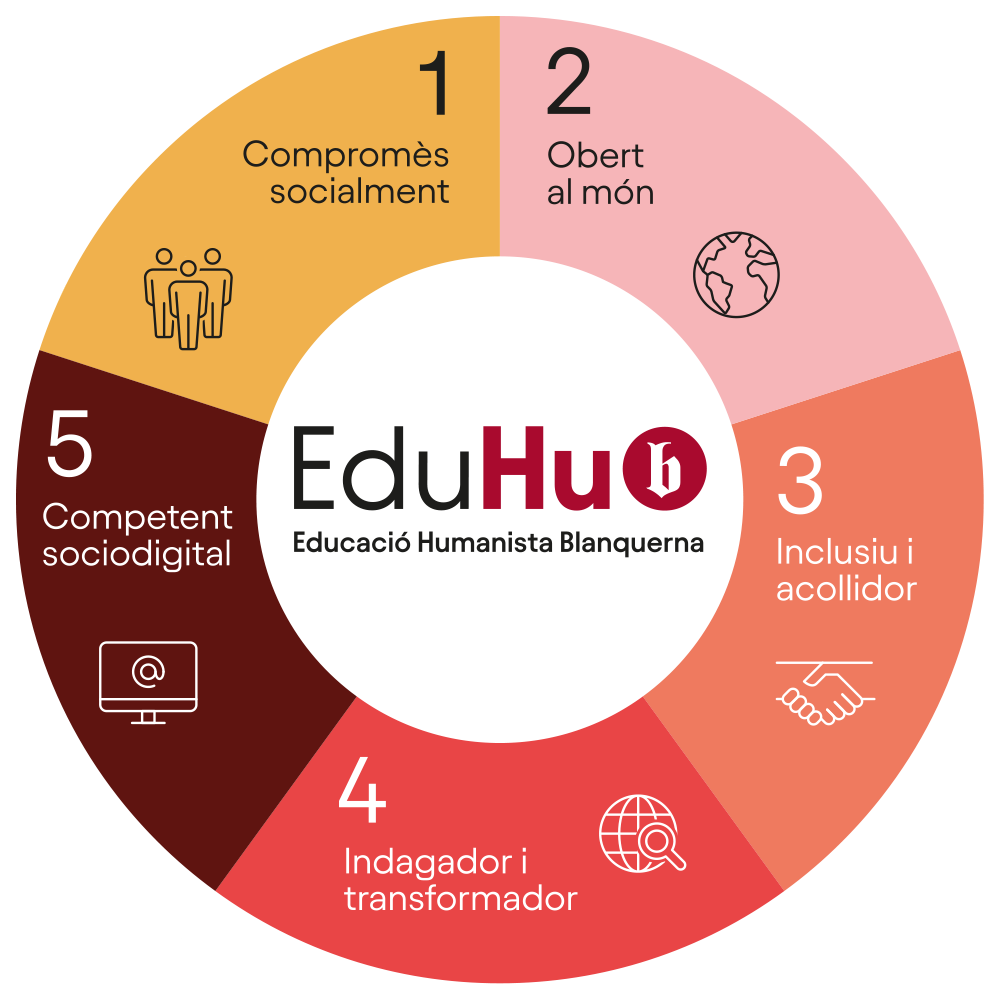
  1. Social commitment: teachers connected with the environment, with the capacity to network with other educational, cultural and social agents in order to work together for equality, solidarity, peacebuilding, freedom and justice.
  2. Multilingualism and openness to the world: teachers who know how and when to use languages in a variety of environments, who know how to seize language learning opportunities, and who are committed to opening up opportunities beyond the immediate context. Many "Blanquerna teachers" who are already working around the world endorse this.
  3. Inclusion: teachers who educate to ensure no child is left behind, based on the diversity and uniqueness of each individual.
  4. Inquiry and transformation: teachers ready to create reflection, innovation and renewal in the classroom and in the school, based on evidence. 5. Digital sensitivity: digitally skilled teachers, as we certify instrumental digital skills (ACTIC: Certification in Information and Communication Technology Skills) and the obtaining of methodological digital skills throughout the bachelor degree
EduHub

Key data

98,6%

of occupational integration, according to the AQU

+1.000

internship agreements

7.4

Assessment in teaching and learning according to the AQU satisfaction survey (above average).

670

hours of internships in schools

A unique methodology based on personalized learning

The Blanquerna methodology is based on seminars, a core element in achieving personalized and qualitative learning and holistic training that includes not only academic and professional competencies but also personal and human skills.

Personalized education

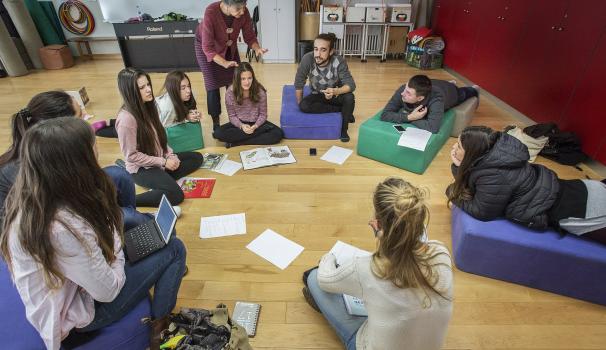
Seminars with small groups of 10-12 students facilitate interdisciplinary learning, intellectual and professional reflection, and customized learning. The faculty advisor collaborates in students' academic, personal and vocational orientation.

Internship centers

We have agreements with more than one thousand internship centers and a 95% job placement. Internships are carried out in pioneering and innovative organizations, institutions and schools that allow you to vindicate everything you have learned during the degree.

Studies abroad

Studying abroad is a life-changing experience. We offer you the opportunity to take part in various exchange programs and international cooperation programs and to do internships abroad. Furthermore, the curriculum includes training to obtain B2 level English certification.

Blanquerna Learning and Service

ApS (Learning and Service) is a complex activity that integrates service to the community with learning: one of the main ideas is that our students can learn by accompanying other social institutions and continue to grow in the acquisition of values and critical thinking. These are activities or projects in which learning is linked to performing a real service.

Testimonials

FPCEE Entrada

Study for a double major

Study for two majors simultaneously, consecutively or following a track tailored to you

Academic information

seminari_fpcee

Curriculum

The subjects of the curriculum are approached from different teaching-learning methodologies, such as cooperative work, project work, case solving, challenges, systematic observation, debates and school work experience.

Credits

FirstSecondThirdFourthTotal
Final degree project 12 12
Core curriculum 42 36 6 18 102
Internships 6 14 18 38
Compulsory 18 12 34 64
Optional 6 6 12 24
Total 60 60 60 60 240

SubjectCreditsAcademic type
Seventh semester
Systematic observation and contextual analysis 6Core curriculum
Optional credits III (choose one of them)
Teaching resources and management of the additional language classroom 6Optional
Didactics and methodology: sound and hearing 6Optional
Physical education and its didactics 6Optional
Students with specific educational support needs 6Optional
Optional credits IV (choose one of them)
Language skills for the teacher 6Optional
Didactics and methodology: The voice and the body, elements of production and musical expression 6Optional
Difficulties and learning disorders 6Optional
Pedagogical fundamentals of the comprehensive teaching of sport 6Optional
Theology and Didactics of the catholic religion II (DECA II) 6Optional
Eighth semester
Education and health 6Core curriculum
Society, family and education 6Core curriculum
Annual
Practicum III: ethics, deontology and professional skills 18Practicum
Final degree project: English 12Final degree project
The optional credits offer includes the necessary subjects to complete the itinerary DECA (Ecclesiastical Declaration of Academic Competence)

We make it easy for you to access the studies you want

Course fees are paid in installments without any interest. At the time of enrollment, 50% of the total cost of the credits for which the student is enrolled must be paid*; the remaining 50% is split into nine monthly installments (from October to June) payable by direct debit.

Tuition fee

Tuition fee per credit
€154,97
Total first-year tuition fees for 2026-27
€9.298,20
Biblioteca_NEXUS_PREUS

Discounts for bachelor's degrees from Blanquerna-Ramon Llull University

Fundació Blanquerna discounts (not cumulative with each other):

  • Student member of a large or single-parent family: 5% discount.
  • Student with disability >33%: 5% discount.
  • Blanquerna family (student, child, sibling or partner, student): 5% discount. Anyone who has completed an official degree will be considered an Alumni.

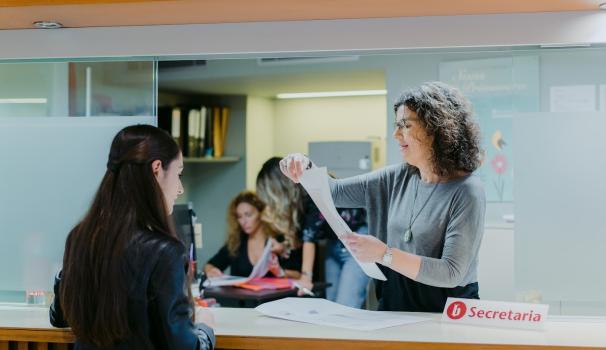
In order to apply the discount, you must prove it with the corresponding document. Students must bring the original document in person to the Academic Secretariat, together with their identification document, for validation and application of the corresponding discount.

The deadline for submitting the supporting documentation for the 2026-2027 academic year is September 30, 2026.

The key professional in the early childhood education stage

fpcee stock

Member of the management teams of schools and educational centers

Member of the management teams of schools and educational centers

fpcee stock

Educational institutions

Head, technician and teacher in different services, foundations and educational institutions.

Interdisciplinary teams in educational services in resource centers.

fpcee stock

Public administrations

Professional development in different areas and educational programs of the public administrations.
psicologia i logopèdia

Non-formal education

Non-formal education in child care centers, hospital classrooms, media, family spaces or educational service companies.


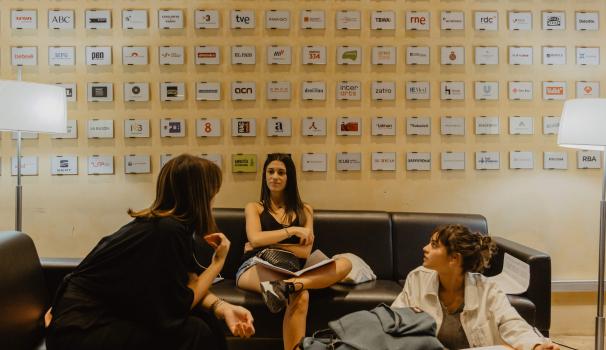
Companies that trust our graduates

Alumnes a la Graduació Blanquerna 2019

A direct link to your future career

Our work doesn't finish the moment you graduate. The Alumni department will support you to enable us to achieve an employment rate of 90% of students in the first year after graduation

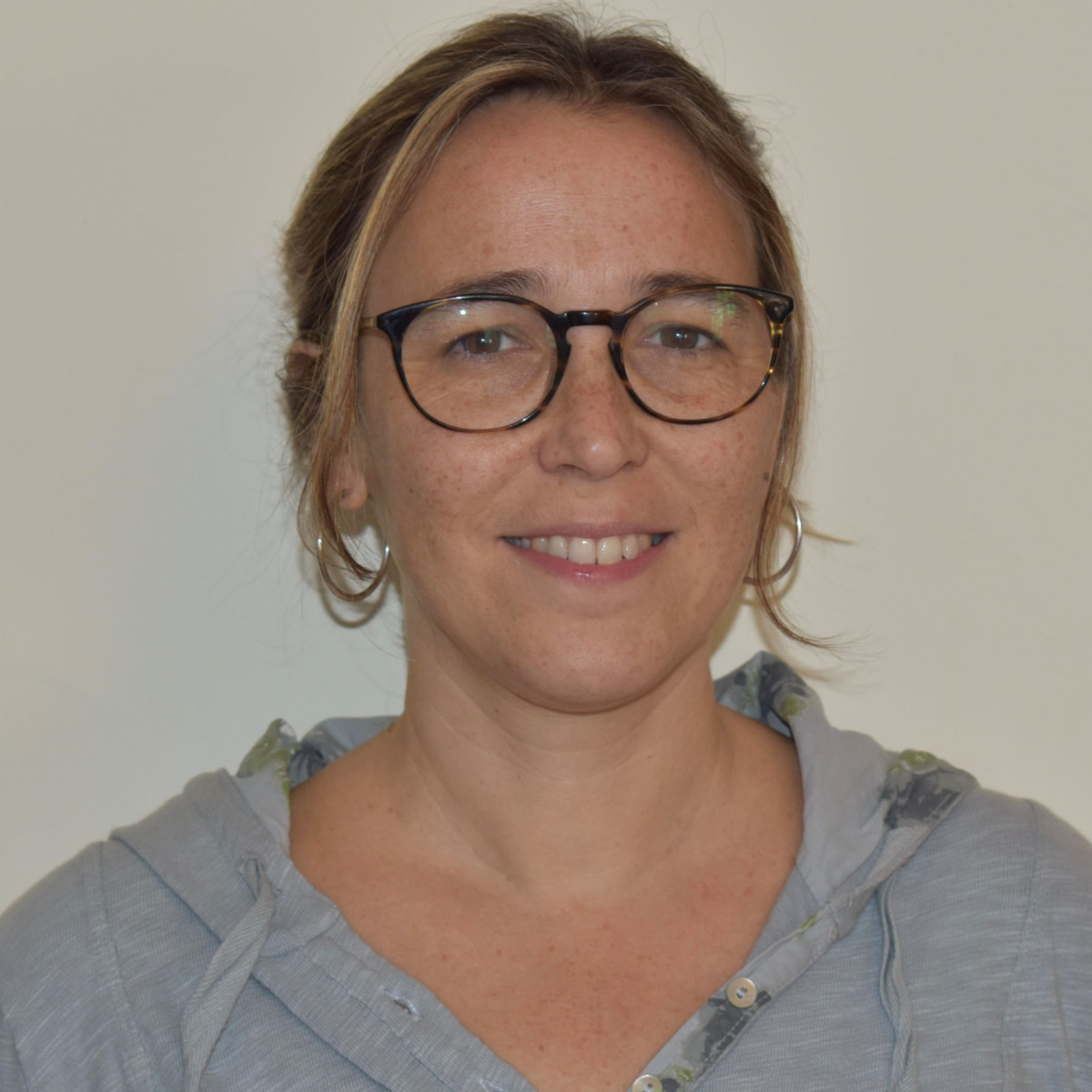
Director

Coordination

Faculty

Application for admission

The application process for a place in the 2026-2027 academic year begins on October 29, 2025, and consists of three phases:

  1. Application for admission
  2. Admission
  3. Enrollment

1. Application for admission

The application for a place can be made online or in person and entitles the applicant to participate in the admission process.

It can be done via the Application for admission button on the page for each degree, or directly from here, and requires:

  1. Registering in the single registration system and creating a user account (if not done previously).
  2. Making a payment of €50 (non-refundable) for admission rights and procedures. This can be done with a credit or debit card through a secure and confidential process with BBVA bank.
  3. Uploading the documentation to the document repository before the deadline for the place application process.
  • Identification document (DNI, NIE, Passport)
  • Certification of university entrance qualifications (PAU (University Entrance Exams), CFGS (Higher-Level Vocational Training), International Baccalaureate Diploma, etc.) if available at the time of applying for a place.

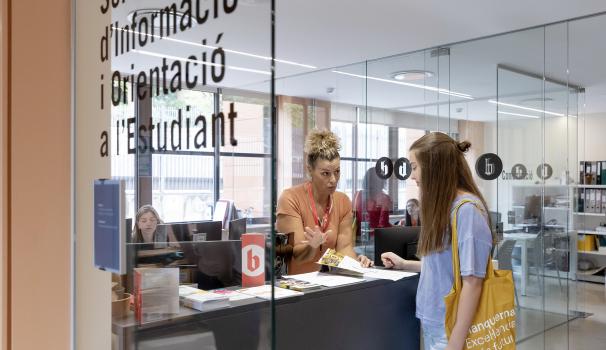
It can be done at the School itself, by going to the Student Information and Guidance Service (SIOE), and the following must be submitted:

  1. Photocopy of the identification document (DNI, NIE, Passport)
  2. Photocopy of the certification of university entrance qualifications (PAU (University Entrance Exams), CFGS, International Baccalaureate Diploma, etc.) if available at the time of applying for a place.
  3. Payment of €50 (non-refundable) for admission rights and procedures. This can be made in cash or with a credit or debit card.

IMPORTANT - BACHELOR'S DEGREE IN PSYCHOLOGY AND BACHELOR'S DEGREE IN NURSING: Students from High School (Batxillerat):

If, at the time of submitting the application for a place in the degrees in Psychology or Nursing, as well as for simultaneous studies in either of these two degrees (e. g., Psychology and Speech and Language Therapy, or Nursing and Nutrition), the final High School and PAU (University Entrance Exams) grades are already available and are equal to or higher than 7, the applicant will be called to enroll once admitted.

If the final entrance grades for High School and PAU (University Entrance Exams) are not available, an official certificate from the educational center must be attached, containing the average grade for the first year or the final High School grade. Once this certificate is submitted, there are two options:

Option 1. If the grade is equal to or higher than 7, the student will be called to make a conditional enrollment and may choose a shift while places are available.

Option 2. If the grade is lower than 7, the student may participate in the June place allocation, which will be based on the submitted grade as the first criterion and the date of payment of the place application as the second criterion. From the date on which the final grade of the university entrance exams becomes available, if there are still places available, only students who have submitted the certificate with their final admission grade will take part in the allocation process.

Note: In the case of students from international high schools, an official document from the school of origin must be submitted with the final average grade for the course and its equivalence to the Spanish system.

IMPORTANT - BACHELOR'S DEGREE IN PSYCHOLOGY AND BACHELOR'S DEGREE IN NURSING: Students from Higher-Level Vocational Training (CFGS):

If, at the time of submitting the application for a place in the degrees in Psychology or Nursing, as well as for simultaneous studies in either of these two degrees (e. g., Psychology and Speech and Language Therapy, or Nursing and Nutrition), the final CFGS grade is already available and is equal to or higher than 8, the applicant will be called to enroll once admitted.

If the entrance grade (neither provisional nor final) for CFGS is not available, applications for a place in the aforementioned studies can be formalized, and the student will participate in the June place allocation, which will be based on the final grade submitted via an official certificate from the educational center containing the final average grade of the qualification. The grade mentioned will be considered as the first criterion, and the date of payment of the place application as the second criterion. For the Bachelor's Degree in Psychology, 10% of places will be reserved for students from this pathway. For the Bachelor's Degree in Nursing, 30% of places will be reserved for students from this pathway.

IMPORTANT – DEGREE IN PSYCHOLOGY AND DEGREE IN NURSING: Students coming from previously started university studies:

If, at the time of applying for a place in the Psychology or Nursing degree programs, as well as for any double degree involving either of these programs (e.g., Psychology and Speech Therapy or Nursing and Nutrition), the applicant has already begun university studies, they must contact the Faculty’s Student Information and Guidance Service.

2. Admission

Approximately within two working days after the place application, the student will be informed by email about their admission. If admitted, the same message will invite them to formalize enrollment, including instructions on when and how to complete the procedure.

The criterion used to call admitted students to formalize enrollment will be the order of payment of the place application. For degrees with more than one shift, note that a shift may fill up during the enrollment period. The place will be definitive once the student has submitted the documentation with the final university entrance information and the first enrollment payment has been made.

For degrees taught in English, students must demonstrate a minimum B2 level of English to be admitted. The level can be accredited through the level test that all degree students must take before starting their program. To prove the minimum level, an official language certificate of B2 or higher can also be submitted: IELTS (6-7), TOEFL (IBT 90-110), CAMBRIDGE, or Official Language Schools, obtained within the last two years. Certificates from other organizations will not be accepted. The certificate does not exempt students from taking the level test to determine the English level for the first year.

It is the student's responsibility to have a level equivalent to B2 in the language of instruction of the degree to properly follow classes

3. Enrollment

The student called to enroll may choose between two options, depending on whether they already have the definitive entrance pathway or not.

  • Conditional Enrollment

Enrollment in the degree can be formalized before passing the PAU (University Entrance Exams) or CFGS or having the entrance pathway. Enrollment will be conditional on the presentation of the corresponding admission pathway. This option secures the place and allows choosing the shift, in the case of degrees with more than one shift, while places are available.

If the student does not obtain the entrance pathway, the enrollment fee will be refunded, but they will lose the place, preference in shift selection, and the amount paid for the place application (€50). If places remain available in July, they may choose to stay on the waiting list until September, and the money will be held, but they will no longer have preference for shift selection. If they do not obtain the entrance pathway by September, the enrollment fee paid will be refunded.

  • Final enrollment

It will be formalized if, at the time of processing the enrollment, the student already has the university entrance pathway. They may opt for the available places and shifts.

IMPORTANT: Degrees with more than one shift may exhaust places in a specific schedule with conditional enrollment. The required documentation must be uploaded via the Document Repository.

The place will be definitive once the student has submitted the documentation with the final university entrance information and the first enrollment payment has been made.

NOTE: Students in the Communication Degrees must take an English level test that will not be exclusionary for admission but will determine the level at which they start the first year. Each student will be informed of the test date and time by email.

Studies can be paid upfront and/or in interest-free installments. If payment by installment is selected, upon enrollment the student will have two business days to pay 50% of the total cost of the enrolled credits, using their chosen form of payment; this payment will not be taken by direct debit. The remaining 50% will be divided into nine monthly payments from October to June via bank direct debit from the account provided at the time of enrollment. Prices for each academic year are updated annually.

Once payment is made, the corresponding receipt of enrollment can be viewed in the student's Document Repository and via the student's portal.

INTERNATIONAL OR FOREIGN STUDENTS

For the foreign student admission process, the following considerations and requirements must be taken into account in accordance with the prevailing regulations.

Students must apply to the Universidad Nacional de Educación a Distancia (UNED) to obtain the credential certifying that they meet the requirements to access university studies within the state education system (UNED Credential). Therefore, they do not need to take the PAU (University Entrance Exams), but without the mentioned credential, they cannot enroll in our degrees.

The education systems that can be accessed through this pathway are: Germany, Andorra, Austria, European Schools (European baccalaureate), International Baccalaureate, Belgium, Bulgaria, Croatia, Denmark, Slovakia, Slovenia, Estonia, Finland, France, Greece, Hungary, Ireland, Iceland, Italy, Latvia, Liechtenstein, Lithuania, Luxembourg, Malta, Norway, the Netherlands, Poland, Portugal, the United Kingdom, the Czech Republic, Romania, Sweden, Switzerland, China and Cyprus.

These students may access our degrees by submitting the homologation of the High School diploma from the Spanish Ministry of Education or from the autonomous communities with transferred competence, such as the Generalitat de Catalunya. Proof of application for convalidation will be sufficient for students to enroll and begin taking a bachelor's degree course, however full enrollment is conditional on convalidation being confirmed. Bear in mind that convalidating studies can take more than three months to complete, so this process should be done in parallel with the admissions process to our bachelor's degrees. If the convalidation resolution is not obtained in the terms requested by the interested party, the results of any exams taken, or the enrollment made as a result thereof, are rendered null and void.

Contact

For any questions or inquiries about the place application or enrollment process, contact [email protected]

The bachelor's degree thesis, the step prior to the labor market

The objective of the bachelor's thesis is to evaluate the assimilation of the core skills acquired during the bachelor's degree. Essentially, it consists of writing a research project or designing an intervention program that allows the student to prove they have assimilated the degree's competences.

The thesis is written during the fourth academic year and has its own seminar. The student decides the topic on which they wants to do the paper, as well as its type, and is tutored by a professor-advisor specialized in the field, who follows the student throughout the course in the Seminar space. The topics may be related to or refer to any of the areas of the profession.

To write the thesis, the student can decide to do a research project or design an intervention program, and the subjects may be related to any of the areas of the profession or make reference to it.

The work will be conducted individually. Projects must be written in Catalan, Spanish, or English. In any case, the work will have to include a summary in English, Catalan, and Spanish.

The bachelor's degree thesis will last two semesters and will be supervised by a professor-advisor, both individually and through Seminar sessions. Thus, there will be a space of two hours per week in which the teacher-advisor will hold group seminar sessions in order to share the process being conducted (set guidelines and organize the activity, choose the topic, provide documentation, plan the activities, etc.). These Seminar sessions will be alternated with individualized follow-up/tutoring (in which each advisor will personally follow up on the thesis).

There will be three grading systems and assessment times:

  1. The assigned advisor will follow up on each assignment throughout the academic year.
  2. Presentation and public defense before an examination committee made up of two professors from the department, one of whom may be the advisor.
  3. Written work: will be corrected by the teacher-advisor.
Alumne biblioteca fpcee

We help you pay for your studies. A future within everyone's reach.

Find the help that best suits your needs between Blanquerna scholarships and grants, public and private grants or funding grants.
Blanquerna-URL is waiting for you!

Scholarships and grants Blanquerna

Beca d'Excel·lència Esportiva

Public aid

funding

Internships, an experience to introduce you to the labor market

At Blanquerna-URL, we emphasize the importance of the Practicum and internships at external centers. That is why we have agreements with more than a thousand organizations and entities where you can apply your theoretical knowledge to the professional world and start focusing on your professional future based on the reality of the sector.

  • Internships in both public and private education centers and in companies with a collaboration agreement
  • Weekly two-hour Practical seminar session
  • Practical seminar assignments
  • Complementary conferences
  • Final report
  • Assessments by the professor-advisor and the center internship advisor

  • Combine an approach to career reality with reflecting and analyzing the lived experience
  • Global analysis of the center, its model of educational and management practice, and its relationship with the environment.
  • Classroom interventions with the support and supervision of the classroom advisor, and with the follow-up and reflection of the academic tutor.
  • Acting as a teacher responsible for the class group, taking the corresponding decisions to manage the classroom.

Where can you do your internship?

In the Education degrees, there is a single internship agreement with the Department of Education that affects all public and subsidized schools in Catalonia, as well as services that depend on the Department.

Blanquerna-URL has alliances with more than a thousand schools and educational centers. Our students do internships at:

  • Public and charter schools
  • Rural schools
  • Hospital classrooms
  • Adult education schools
  • Municipal kindergartens

Degree accredited by the AQU (Quality Assurance Agency)

Gender perspective

As the European Union points out, gender equality is not only a matter of social justice but also affects the results of teaching and research. Promoting gender equality in research and innovation is one of the European Commission's commitments, and it supports the explicit integration of a gender perspective in Horizon 2020 projects. However, this recommendation is often poorly understood and misapplied. Various documents are presented here with a view to contributing to a better understanding and application of the gender perspective in teaching and research.

logo

We equip you for change