100% in English
Prepare to work in international environments, European institutions, multinationals, and global organizations.
Enrolment closed

Morning shift, 8 a.m. to 2 p.m.
Facultat de Comunicació i Relacions Internacionals (plaça Joan Coromines. 08001 Barcelona)
How are housing policies decided? Who takes part in shaping the laws that regulate new technologies? How are measures against climate change negotiated?
Behind major decisions are professionals who analyze problems, connect institutions, companies, and social organizations, and work to find solutions.
The Bachelor’s Degree in Public Affairs & Governance at Blanquerna-URL, in Barcelona, is a four-year official university degree, taught entirely in English, that prepares you to participate in the design, negotiation, implementation, and evaluation of public policies.
Prepare to work in international environments, European institutions, multinationals, and global organizations.
Solid foundation in Humanities and Social Sciences.
Applied, hands-on skills training.
Strong ethical and humanistic component.
We equip you with key skills for debate, complex negotiation, public speaking, public procurement, and e-governance through the BQN-15 small-group seminars.
A pioneering university education in Catalonia and Spain that integrates political science, law, economics, sociology, communication, and public management to develop the necessary skills to work in the public, private, and social sectors.
If you are interested in current affairs, enjoy debating, have an international perspective, and want to contribute to transforming society, this degree is for you.
1. A pioneering degree with an international vision
An innovative degree that brings a practical approach to public affairs and governance into university education, inspired by international academic benchmarks.
2. Practical learning from day one
Learn to negotiate, debate, communicate, analyze regulations, and design public policies through an applied and participatory methodology.
3. Three professional sectors, multiple opportunities
Prepare to work in public administrations, consulting firms, multinational companies, international institutions, and social organizations (NGOs and the third sector).
The degree prepares you to develop a career in public affairs, governance, and public policy across three main professional areas.
You can direct your career path toward:
The Blanquerna methodology is a distinctive way of understanding university learning: personalized, relational, experiential, and connected to professional and social reality. It combines close guidance and work in small groups, simulations and professionalizing experiences, learning situated in social contexts, and the connection between disciplines, courses, degrees, and professions. In this way, students build meaningful knowledge and develop the competencies needed to engage with a complex and changing world.
Public affairs is the professional field that connects public institutions, companies, and social organizations to influence collective decisions in a legitimate and transparent manner.
Governance refers to the processes of coordination, negotiation, and decision-making among these actors to respond to society’s challenges.
Studying Public Affairs & Governance means learning how public policies are designed, how the interests of different sectors are negotiated, and how effective solutions can be implemented in areas such as housing, health, sustainability, education, or technology. It is political science applied to the transformation of society.
Political Science degrees offer a foundation for understanding political systems, institutions, and political behavior. The Bachelor’s Degree in Public Affairs & Governance at Blanquerna places special emphasis on the professional application of this knowledge: negotiation, public policy design, management, regulation, and relations among institutions, companies, and social organizations.
No. The degree is not limited to party politics. It prepares you to work in public affairs, consulting, institutional relations, administrations, companies, and social organizations. It also provides a useful foundation if you aim to work on political advisory teams or in parliamentary institutions.
Yes. The Bachelor’s Degree in Public Affairs & Governance at Blanquerna is taught 100% in English and has an international orientation. Together with the Bachelor’s Degrees in International Relations and in Global Communication for Business Management, the new degree completes an offering of three official bachelor’s degrees taught entirely in English. The School of Communication and International Relations has a 30% international student body, positioning the center as an international academic benchmark in Barcelona.
The main career opportunities are in public policy, public affairs consulting, institutional relations, regulatory affairs, public management, social advocacy, and projects in international organizations and the third sector.
Barcelona offers a university and institutional environment from which to approach the challenges of governance, public policies, and relations among institutions, companies, and civil society. At Blanquerna-URL, you can pursue a degree taught entirely in English, with applied training and small-group seminars. Through the BQN-15 seminars, supervised by industry experts, you will develop key competencies, acquiring high-performance skills such as complex negotiation, public speaking, public procurement, and digital governance.

The curriculum of the Bachelor’s Degree in Public Affairs & Governance (240 ECTS), taught 100% in English over four years, merges a solid foundation in social sciences, law, economics, and humanities with practical training in real-world governance. Built around Blanquerna’s signature small-group seminars (15 students), the program trains executive skills such as complex negotiation, public speaking, and policy analysis rooted in strong ethical commitment. Furthermore, with the mandatory professional internships, the degree prepares students to drive impact across any of the three pillars of public action: the public, private, or social sector.
| Subject | |||
| First semester | |||
| English for Public Affairs I | 4 | Compulsory | |
| Seminar 1. Communicative and Analytical Skills: Arguing and Reporting | 8 | Compulsory | |
| Political and Social Ideas | 6 | Core curriculum | |
| Evolution of International Society | 6 | Core curriculum | |
| Political Science for Governance | 6 | Core curriculum | |
| Second semester | |||
| English for Public Affairs II | 4 | Compulsory | |
| Seminar 2. Stakeholders in Public Affairs | 8 | Compulsory | |
| Introduction to Public Affairs | 6 | Core curriculum | |
| Essentials of Law | 6 | Core curriculum | |
| Essentials of Economics | 6 | Core curriculum |
| Subject | |||
| Third semester |
Course fees are paid in installments without any interest. At the time of enrollment, 50% of the total cost of the credits for which the student is enrolled must be paid*; the remaining 50% is split into nine monthly installments (from October to June) payable by direct debit.
The tuition fee / credit of degrees is regularized each academic year for all courses.
Fundació Blanquerna discounts (not cumulative with each other):
In order to apply the discount, you must prove it with the corresponding document. Students must bring the original document in person to the Academic Secretariat, together with their identification document, for validation and application of the corresponding discount.
The deadline for submitting the supporting documentation for the 2027-2028 course is September 30th, 2027.

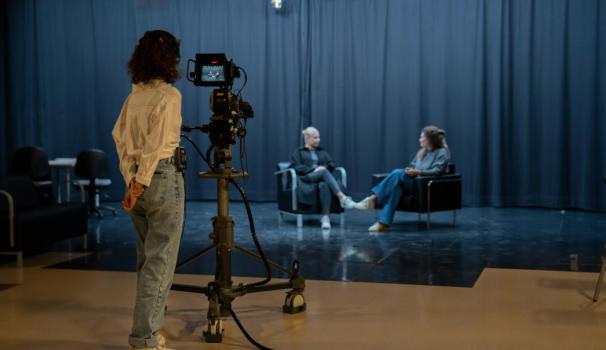
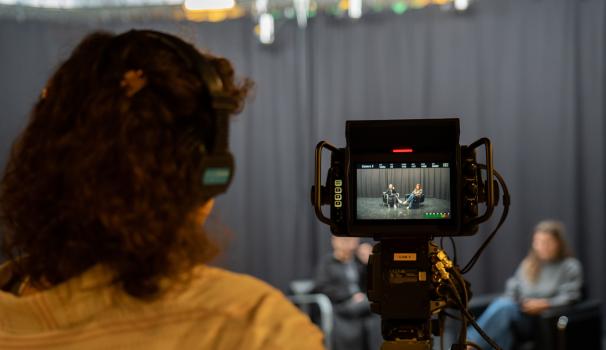
In front of or behind the camera? You can work on any of these skills in the school's two television studios. In addition to the cameras, you can learn how the production room, the lighting and the teleprompter work.
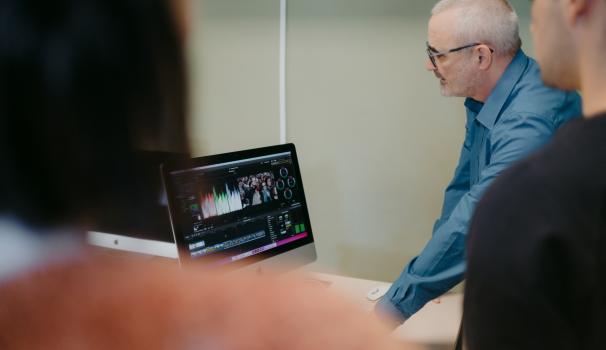
Available for both academic work and personal projects, you will find a total of 9 audio and video post-production rooms at the school, equipped with pioneering programs such as Photoshop, DaVinci Resolve, Final Cut Pro, Premiere Pro, After Effects and Audition.

Whether it's broadcasting live or recording a podcast, you'll find all the equipment you need to do radio. The school has two radio studios and three individual workspaces equipped with microphones and telephones for external interviews.
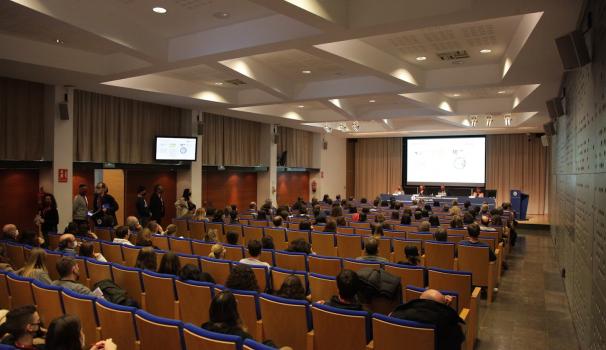
The school has an auditorium that can be used for celebrations, academic events, conferences or activities. In addition to the school's events, the space hosts other occasions that require ample space.
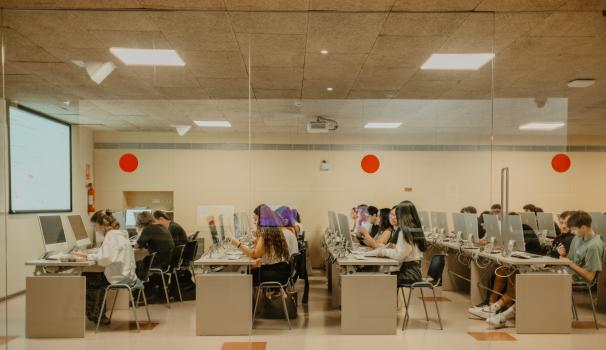
If you have a job or just need a computer, you can go to the computer classrooms or workspaces and use the Macs we have at your disposal.
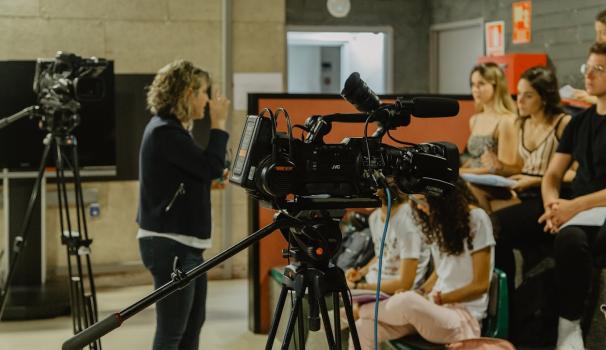
Going into the world of work having been able to use professional equipment is essential. That's why we provide you with cameras that are used in the Audiovisual Communication and Journalism sectors so that you can learn with professional teams.

If you need a quiet space to study or to do individual and group work, come to the library! Each school has its own library with computers, workrooms, reading points and an extensive catalog of documents you can consult in both hard copy and digital format.

If you have a job or just need a computer, you can go to the computer classrooms or workspaces and use the Macs we have at your disposal.

The chapel is the right place to find recollection, peace, to focus, to pray and to celebrate the Eucharist weekly and at important liturgical moments (Christmas, Ash Wednesday and Easter). The sacrament of reconciliation is also celebrated.
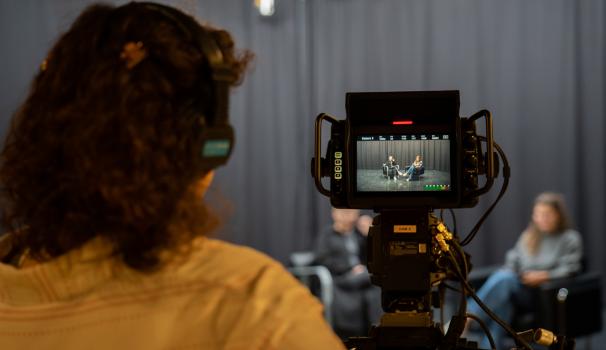
Using the latest equipment and audio-visual techniques is part of the learning process and enables students to enter the world of work with a broad knowledge of computer science. For this reason, the schools are equipped with audio-visual material for viewing and editing and a video library.

Ets estudiant o Alumni dels graus en Comunicació o del Grau en Relacions Internacionlals i tens un projecte que requereix equipament tecnològic i assessorament professional? Posem a la teva disposició el programa de mentoring, un servei per donar suport tecnològic i assessorament a aquests projectes.
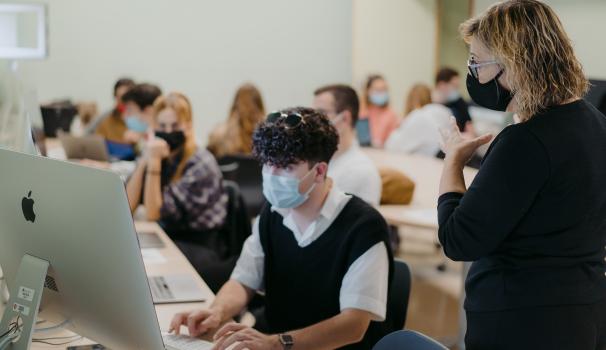
Our facilities include Mac computers, state-of-the-art software, WiFi network and printers to provide students with all the materials they need in their learning process.

Ethics in the field of research is fundamental. The Faculty Research Institutes are supported by the opinions of the Research Ethics Committees (CER-URL) to evaluate and rate projects that have ethical implications.
If you are part of a research group, a professor or a PhD student and you need help with a project, you can ask for advice. This assistance includes analysis, guidance, help with applying for awards, and the financial management of projects.
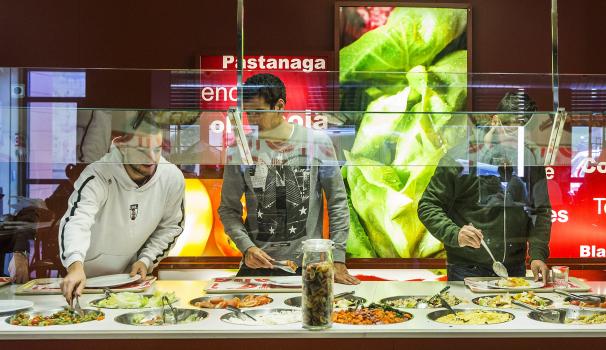
The nerve center of the quintessential faculties is the bar. There, teachers, students and staff meet throughout the day for breaks or meals.

The Academic Secretaries of the Blanquerna faculties are the space for students to relate to the processes linked to the registration of official and own courses.
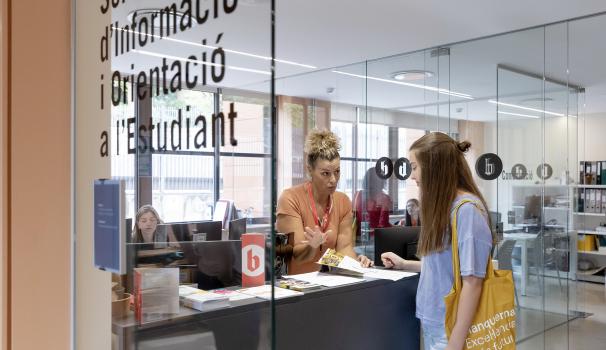
Would you like to receive information on pre-registration and admissions processes, scholarships and grants or validations? The SIOE is the service you need. Ask for all the information about any of these processes and discover all the possibilities at your fingertips.
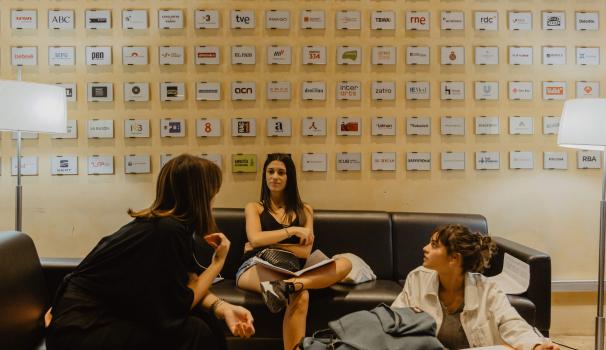
Professional experience is a core part of our methodology. For this reason, we have a broad spectrum of internship agreements to meet the needs and preferences of all students. You will graduate having worked in your industry.

At Blanquerna, we put the future within everyone's reach thanks to our scholarships and grant service to start or continue studying at our schools. Financial aid is both internal and external to the university. You will find a wide range of possibilities.

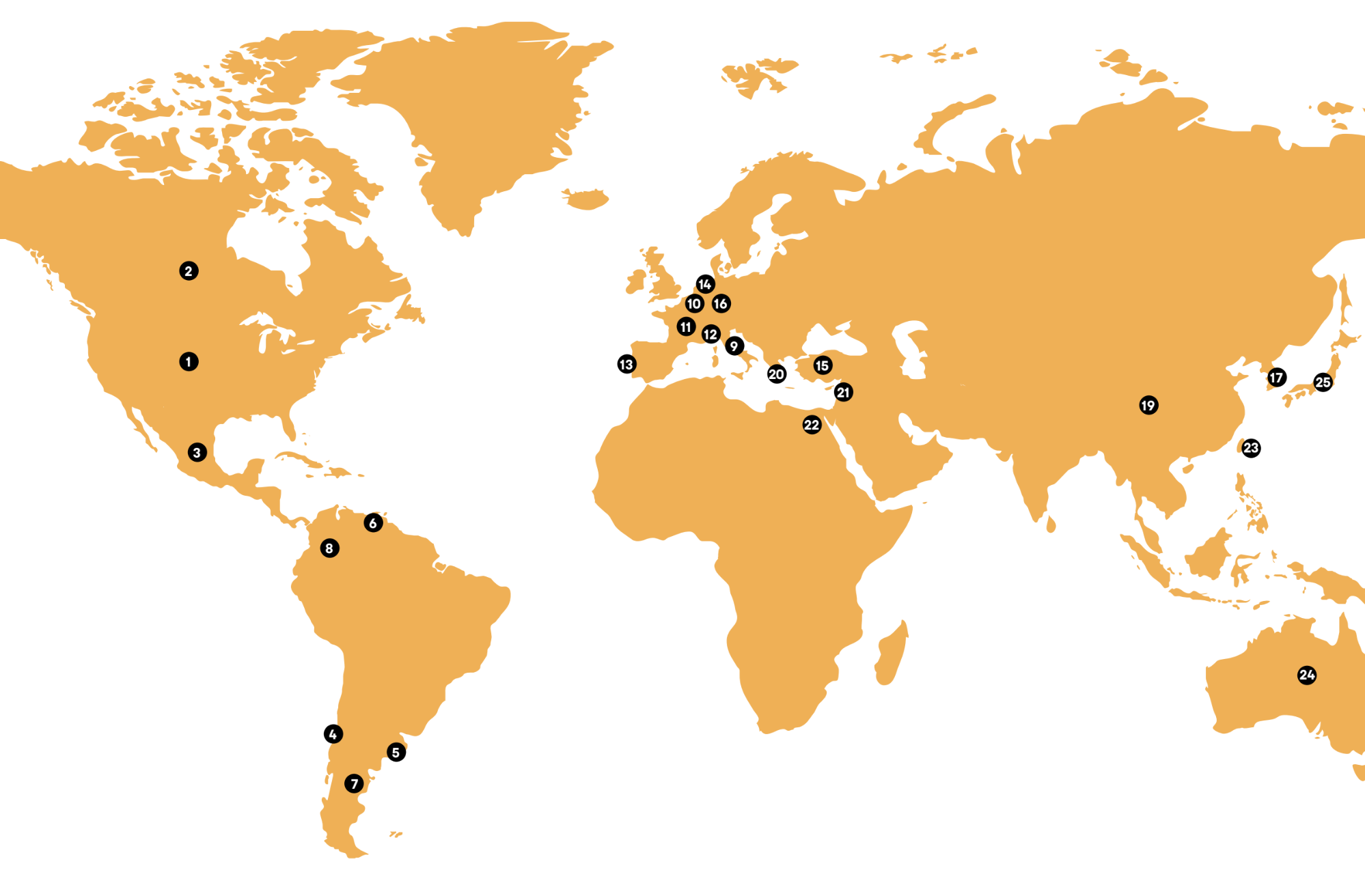
Going abroad is a unique opportunity to discover the plurality of the world. Aware of the importance of the internationalization of studies, we have established mobility agreements around the world.
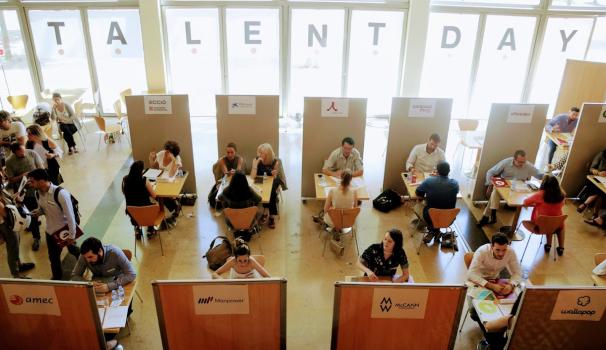
This service provides graduates with the necessary means so that they can actively participate in their professionalism and propose optimal candidates to organizations and companies looking for staff.

The leap into the world of work is always a challenge. For this reason, we provide a Job Bank for students and graduates. This service puts students in touch with companies and institutions looking for staff.
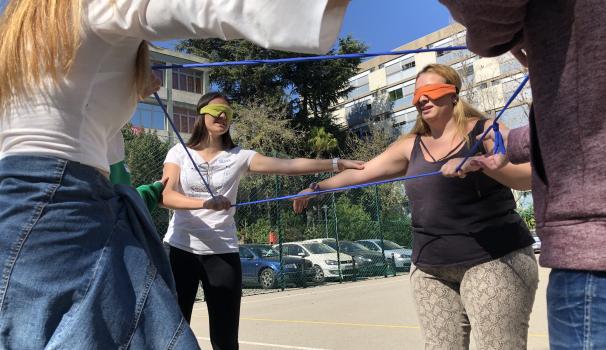
Solidarity and the struggle for human dignity are values that identify us. Social Commitment is a volunteer program that our students can join to participate in projects in the Third and Fourth World.

Studying in Blanquerna allows you to be part of our community. Being a college student opens the door to a lot of options for continuing your vocational training beyond your time in the classroom.

Want to represent the URL in college sports tournaments? You can find a wide range of possibilities for both individual and team sports. To be a student of Blanquerna, you will have a discount at the Can Caralleu and La Salle Sport & Fitness sports complexes.

If you are in a difficult situation in the academic, personal or social field, you can request, free of charge, the personalized attention of the SOP. This is an interdisciplinary team of professionals who will guide you in dealing with the situation.
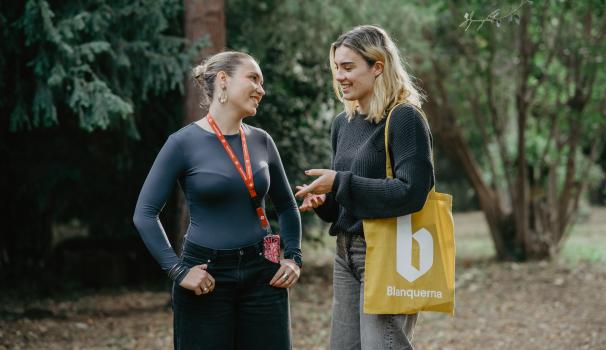
In the three Blanquerna faculties, you will find spaces for reflection isolated from the hustle and bustle dedicated to the celebration of the Faith or cultural and religious animation. If you wish, you can also receive personalized attention and information about church life.
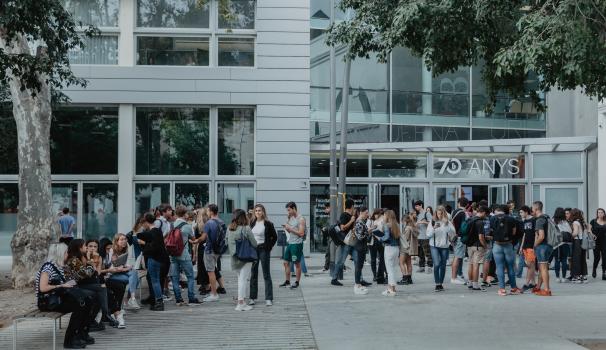
At Blanquerna we promote personal development at all levels to people with a diversity of specific needs from a normalizing context that encourages personal autonomy and uniqueness.
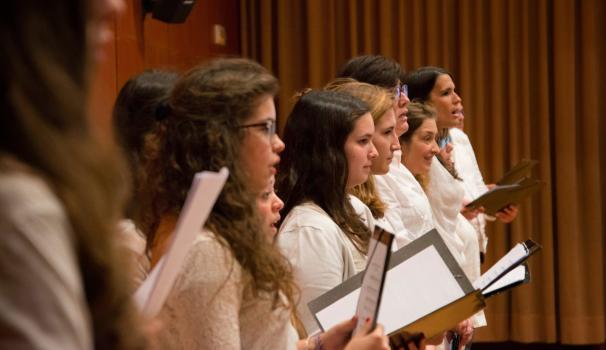
If you like music and want to take part in the concerts of institutional events and festivities, sign up for the Blanquerna Choir. There you will meet new friends and enjoy music.
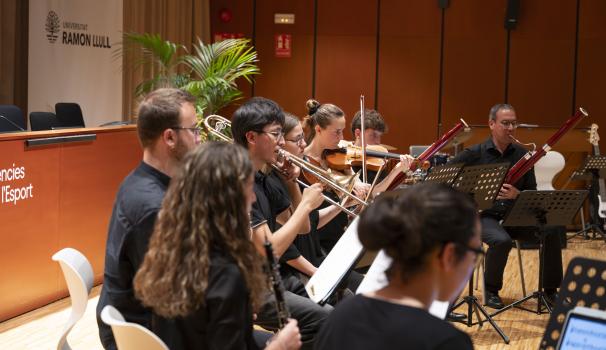
If you play a string instrument (violin, viola, cello, double bass…), a wind instrument (oboe, clarinet, bassoon, French horn, trumpet, trombone, tuba…), or percussion (timpani…), join us! And don’t worry — if you play another instrument (saxophone, drums, flugelhorn…), you’re also welcome to audition!

Each class group must elect a representative to put forward concerns or make proposals to the faculty members and academic management. At the same time, each degree must appoint a delegate and each school a representative on the general URL council.

Contact between students and the university is constant and is channeled through the Student Council, the body that collects proposals and requests from students and facilitates university life.

Are you studying a foreign language and want to improve your level? Do it at your own pace in the language self-learning classroom. This service offers various teaching resources and materials to practice the language.

We’re here to listen! Have you experienced or witnessed any situation of harassment? Do you have any questions about Blanquerna’s equality policy? Would you like to make a proposal or suggestion regarding gender issues? Use this Anti-harassment Point: write to us through the channels you’ll find at the bottom of this page.
The Blanquerna-URL School of Communication and International Relations, well aware of the European scope of the studies it offers, has presented various projects in the field of internationalization since the 1997–1998 academic year, including mobility programs for students in the fourth year of the bachelor's degrees in Communication and Global Communication Management, and third-year students of International Relations, and the exchange program for professors and administrative staff.
The application process for a place in the 2027-2028 academic year is now open and consists of three phases:
The application for a place can be made online or in person and entitles the applicant to participate in the admission process.
It can be done via the Application for admission button on the page for each degree, or directly from here, and requires:
It can be done at the School itself, by going to the Student Information and Guidance Service (SIOE), and the following must be submitted:
Approximately within two working days after the place application, the student will be informed by email about their admission. If admitted, the same message will invite them to formalize enrollment, including instructions on when and how to complete the procedure.
The criterion used to call admitted students to formalize enrollment will be the order of payment of the place application. For degrees with more than one shift, note that a shift may fill up during the enrollment period. The place will be definitive once the student has submitted the documentation with the final university entrance information and the first enrollment payment has been made.
For degrees taught in English, students must demonstrate a minimum B2 level of English to be admitted. The level can be accredited through the level test that all degree students must take before starting their program. To prove the minimum level, an official language certificate of B2 or higher can also be submitted: IELTS (6-7), TOEFL (IBT 90-110), CAMBRIDGE, or Official Language Schools, obtained within the last two years. Certificates from other organizations will not be accepted. The certificate does not exempt students from taking the level test to determine the English level for the first year.
It is the student's responsibility to have a level equivalent to B2 in the language of instruction of the degree to properly follow classes
The student called to enroll may choose between two options, depending on whether they already have the definitive entrance pathway or not.
Enrollment in the degree can be formalized before passing the PAU (University Entrance Exams) or CFGS or having the entrance pathway. Enrollment will be conditional on the presentation of the corresponding admission pathway. This option secures the place and allows choosing the shift, in the case of degrees with more than one shift, while places are available.
If the student does not obtain the entrance pathway, the enrollment fee will be refunded, but they will lose the place, preference in shift selection, and the amount paid for the place application (€50). If places remain available in July, they may choose to stay on the waiting list until September, and the money will be held, but they will no longer have preference for shift selection. If they do not obtain the entrance pathway by September, the enrollment fee paid will be refunded.
It will be formalized if, at the time of processing the enrollment, the student already has the university entrance pathway. They may opt for the available places and shifts.
IMPORTANT: Degrees with more than one shift may exhaust places in a specific schedule with conditional enrollment. The required documentation must be uploaded via the Document Repository.
The place will be definitive once the student has submitted the documentation with the final university entrance information and the first enrollment payment has been made.
NOTE: Students in the Communication Degrees must take an English level test that will not be exclusionary for admission but will determine the level at which they start the first year. Each student will be informed of the test date and time by email.
Studies can be paid upfront and/or in interest-free installments. If payment by installment is selected, upon enrollment the student will have two business days to pay 50% of the total cost of the enrolled credits, using their chosen form of payment; this payment will not be taken by direct debit. The remaining 50% will be divided into nine monthly payments from October to June via bank direct debit from the account provided at the time of enrollment. Prices for each academic year are updated annually.
Each year, the Blanquerna Foundation will allocate to the Blanquerna Grants Fund any of the initial tuition payments that were received from individuals who, in the end, did not actually begin their studies. These funds are the non-refundable portion of the tuition fees, which, in accordance with the General Terms and Conditions and applicable regulations, have not otherwise been authorized for refund or held as credit towards a future enrollment. This allocation does not alter or limit students' rights, nor any financial or academic arrangements to which they may be entitled. This funding will be given in the form of a discount on tuition fees.
You can consult the General Enrollment Terms and Conditions at this link.
Once payment is made, the corresponding receipt of enrollment can be viewed in the student's Document Repository and via the student's portal.
For the foreign student admission process, the following considerations and requirements must be taken into account in accordance with the prevailing regulations.
Students must apply to the Universidad Nacional de Educación a Distancia (UNED) to obtain the credential certifying that they meet the requirements to access university studies within the state education system (UNED Credential). Therefore, they do not need to take the PAU (University Entrance Exams), but without the mentioned credential, they cannot enroll in our degrees.
The education systems that can be accessed through this pathway are: Germany, Andorra, Austria, European Schools (European baccalaureate), International Baccalaureate, Belgium, Bulgaria, Croatia, Denmark, Slovakia, Slovenia, Estonia, Finland, France, Greece, Hungary, Ireland, Iceland, Italy, Latvia, Liechtenstein, Lithuania, Luxembourg, Malta, Norway, the Netherlands, Poland, Portugal, the United Kingdom, the Czech Republic, Romania, Sweden, Switzerland, China and Cyprus.
These students may access our degrees by submitting the homologation of the High School diploma from the Spanish Ministry of Education or from the autonomous communities with transferred competence, such as the Generalitat de Catalunya. Proof of application for convalidation will be sufficient for students to enroll and begin taking a bachelor's degree course, however full enrollment is conditional on convalidation being confirmed. Bear in mind that convalidating studies can take more than three months to complete, so this process should be done in parallel with the admissions process to our bachelor's degrees. If the convalidation resolution is not obtained in the terms requested by the interested party, the results of any exams taken, or the enrollment made as a result thereof, are rendered null and void.
For any questions or inquiries about the place application or enrollment process, contact [email protected].
The curriculum of the bachelor's degree in Public Affairs and Governance includes a thesis, as a subject that students have to take in the fourth year of the degree. This work constitutes in itself a key instrument in the student's education, which has to allow them to integrate the learning acquired throughout the degree, to delve into the various areas of knowledge, to understand its transdisciplinarity, as well as to develop discursive and argumentative skills, analysis, use of sources of information and documentation, communication, initiative and autonomy.
The thesis is written during the fourth academic year and has its own seminar. The student decides the topic and type of thesis. To write the thesis, the student can decide to do a research project or design an intervention program that will be tutored throughout the academic year by a professor-tutor specializing in that area.
The topics may be related to any of the areas of the profession and, where applicable, may also be linked to the center where the student is doing the internship or to the School's research groups.
The project will be completed in groups and written in English. In every instance, it must feature an abstract in English.
The bachelor's degree thesis will last two semesters and will be supervised by a professor-advisor, both individually and in the Seminar space.
Within this space, the process carried out is shared in groups, guidelines are established, and the activity is organized. These Seminar sessions will be alternated with individualized follow-up/tutoring (in which each advisor will personally follow up on the thesis).
The assessment process will involve three grading methods and stages:

There are two types of external internships: curricular and extracurricular.
Curricular internships are those that form part of our curriculum: these are compulsory internships that are taken in parallel to seminar VI during the second semester of third year and the elective ones taken during the first semester of fourth year. The seminar VI professor is the advisor who will supervise the evolution of the student in their internships and guide them throughout the process. In the fourth year elective courses, the internship coordinator will appoint a faculty member to conduct a follow-up of the student. In the company, students will also have an advisor appointed by the center who will supervise their learning.
Extracurricular internships are all others that the student can do electively outside the curriculum, although they also have an exclusively training and teaching purpose and will therefore be included in the European Diploma Supplement (EDS). In all cases, the internship must be compatible with the student's class hours. Internships may or may not be remunerated, depending on the company or institution.
In the following links you will find the program of the curricular internships.
Students also have the opportunity to do internships abroad through different agreements with companies via programs such as Erasmus+.
The curricular and extracurricular internships are regulated by point 17 of the school's academic regulations.
The student's advisor in the school will provide students with the criteria to follow to successfully pass the internship course and the parameters for drawing up the internship report. Here is the guide to writing the report.
This must be done by contacting the School's Internship Service.
Center follow-up report
Student surveys
Faculty surveys (research and teaching staff)
Administrative and service staff surveys
Evidence relating to employer satisfaction
Job bank and careers
URL Student mobility
As the European Union points out, gender equality is not only a matter of social justice but also affects the results of teaching and research. Promoting gender equality in research and innovation is one of the European Commission's commitments, and it supports the explicit integration of a gender perspective in Horizon 2020 projects. However, this recommendation is often poorly understood and misapplied. Various documents are presented here with a view to contributing to a better understanding and application of the gender perspective in teaching and research.
RELATED PROGRAMS
We equip you for change