- Home/
- Bachelor's Degree in Social Education
Bachelor's Degree in Social Education
Enrolment closed

- ModalityIn-person
- LanguagesCatalan
- Duration4 academic years
- Credits240
- DateSeptember 2026
- Location
Blanquerna-URL - Plaça Joan Coromines. 08001 Barcelona
- Faculty
School of Communication and International Relations

Become a Social Educator: A Profession with a Future
Do you want to live in a better world? Do you want to make it possible? Social Education will allow you to become a key player in a change that’s increasingly necessary. We’ll give you the tools to help others, to break down social inequalities, and to turn your vocation into a profession.

The purpose of the Bachelor's Degree in Social Education is to promote autonomy, social integration, and empowerment for the exercise of human rights in a more just and equitable world.
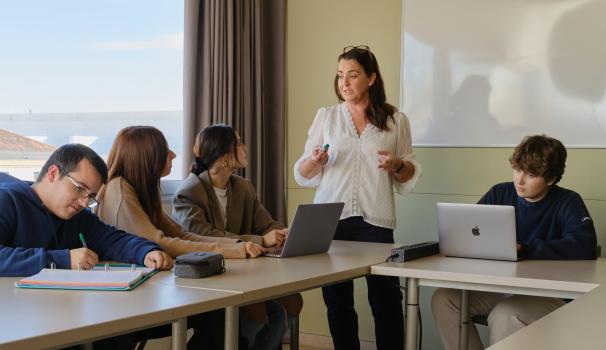
In the Bachelor's Degree in Social Education, you'll study in small classes with personalized follow-up. in our social laboratory, you will discover innovative techniques to apply to social issues and learn to find effective solutions.

Double Degree in Social Education and Social Work
You can earn both degrees in less than 6 years!
Academic information
Credits
| First | Second | Third | Fourth | Total | |||
| Practicum | 6 | 6 | 12 | ||||
| Final degree project | 11 | 11 | |||||
| Core curriculum | 48 | 12 | 60 | ||||
| Internships | 15 | 16 | 31 | ||||
| Compulsory | 6 | 39 | 39 | 18 | 102 | ||
| Optional | 3 | 6 | 15 | 24 | |||
| Total | 60 | 60 | 60 | 60 | 240 |
| Subject | |||
| First semester | |||
| Sociology | 6 | Core curriculum | |
| Social history | 6 | Core curriculum | |
| Law and citizenship | 6 | Core curriculum | |
| Life cycle psychology | 6 | Core curriculum | |
| Fundaments of socio-educational intervention | 6 | Compulsory | |
| Practicum I: Approach to social action | 3 | Practicum | |
| Second semester | |||
| Social anthropology | 6 | Core curriculum | |
| Educational theories and processes | 6 | Core curriculum | |
| Social policy | 6 | Core curriculum | |
| Social psychology | 6 | Core curriculum | |
| Practicum II: Communication tools | 3 | Practicum |
| Subject | |||
| Third semester | |||
| Social skills | 6 | Core curriculum | |
| Research methods and techniques | 6 | Core curriculum | |
| Teaching | 6 | Compulsory | |
| Social services | 6 | Compulsory | |
| Salut i serveis socioeducatius | 6 | Compulsory | |
| Practicum III: Social intervention contexts | 3 | Practicum | |
| Fourth semester | |||
| Childhood and adolescence | 6 | Compulsory | |
| Community education | 6 | Compulsory | |
| Interview techniques | 6 | Compulsory | |
| Social structure and inequalities | 3 | Compulsory | |
| Practicum IV: Social analysis of an area | 3 | Practicum |
| Subject | |||
| Fifth semester | |||
| Managing crisis situations | 6 | Compulsory | |
| Professional ethics | 6 | Compulsory | |
| Designing and planning socio-educational action | 6 | Compulsory | |
| Organisation management | 3 | Compulsory | |
| Sixth semester | |||
| Group dynamics | 6 | Compulsory | |
| Programme evaluation | 6 | Compulsory | |
| Perspectives on Social Innovation I: local strategies | 3 | Compulsory | |
| Research applied to intervention | 3 | Compulsory | |
| Annual | |||
| Practicum V of Social Education: Institutional knowledge | 15 | Practicum |
| Subject | |||
| Seventh semester | |||
| Salut mental aplicada a l'Educació Social | 3 | Compulsory | |
| Practicum VI of Social Education: Professional action practice | 16 | Practicum | |
| Eighth semester | |||
| Social organisation management | 3 | Compulsory | |
| Social teaching | 6 | Compulsory | |
| Perspectives on Social Innovation II: european strategies | 6 | Compulsory | |
| Annual | |||
| Social Education Final Degree Thesis | 11 | Final degree project |
Discounts for bachelor's degrees from Blanquerna-Ramon Llull University
Fundació Blanquerna discounts (not cumulative with each other):
- Student member of a large or single-parent family: 5% discount.
- Student with disability >33%: 5% discount.
- Blanquerna family (student, child, sibling or partner, student): 5% discount. Anyone who has completed an official degree will be considered an Alumni.
In order to apply the discount, you must prove it with the corresponding document. Students must bring the original document in person to the Academic Secretariat, together with their identification document, for validation and application of the corresponding discount.
The deadline for submitting the supporting documentation for the 2026-2027 academic year is September 30, 2026.
Career opportunities
Social services
Childhood, family, and school
Penitentiary centers and juvenile justice
Workshops, individual plans, and tutorials
Promotion and protection of childhood and youth
Reception centers, residential facilities, open centers, leisure…
Socio-health services
Socio-health services, day centers and residences for the elderly, drug addictions, mental health…
Labor insertion
Community and family mediation
Women's shelters
Vulnerable groups
Homeless, refugees, social emergency care, immigrants…
Functional diversity
Labor or pre-labor services, daily life accompaniment...
Social projects
Design and evaluation of sexual education projects, drug dependencies, eating disorders...
Applied research and investigation
Community work and international cooperation
Performing arts applied to social action

Gesell Chamber
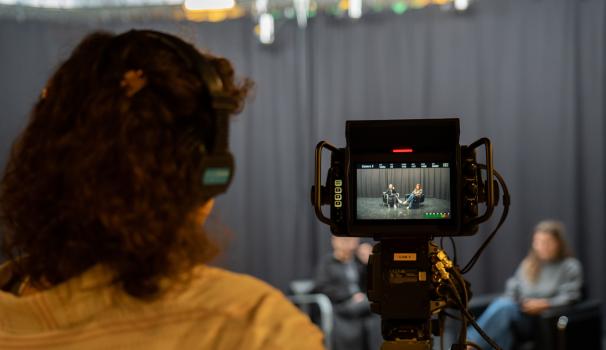
Designed for research and professional simulation, this room is specially equipped to observe people without interfering with their behaviour. The space consists of two rooms separated by a one-way mirror and features a high-definition audio and video system, making it ideal for education and social work practice, as well as market research.
Libraries

If you need a quiet space to study or to do individual and group work, come to the library! Each school has its own library with computers, workrooms, reading points and an extensive catalog of documents you can consult in both hard copy and digital format.

Computer rooms
If you have a job or just need a computer, you can go to the computer classrooms or workspaces and use the Macs we have at your disposal.

Chapel

The chapel is the right place to find recollection, peace, to focus, to pray and to celebrate the Eucharist weekly and at important liturgical moments (Christmas, Ash Wednesday and Easter). The sacrament of reconciliation is also celebrated.

Academic Secretary

The Academic Secretaries of the Blanquerna faculties are the space for students to relate to the processes linked to the registration of official and own courses.

Student Information and Guidance Service (SIOE)
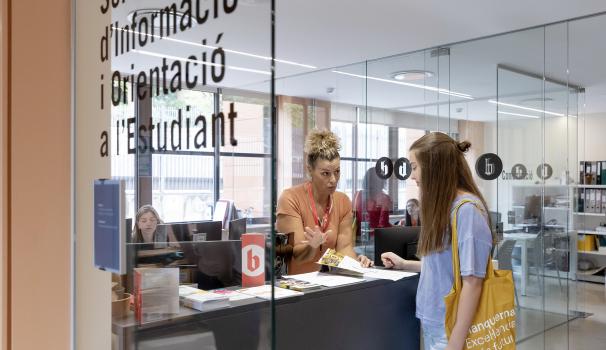
Would you like to receive information on pre-registration and admissions processes, scholarships and grants or validations? The SIOE is the service you need. Ask for all the information about any of these processes and discover all the possibilities at your fingertips.
Internship service

Professional experience is a core part of our methodology. For this reason, we have a broad spectrum of internship agreements to meet the needs and preferences of all students. You will graduate having worked in your industry.

Scholarships and grants service

At Blanquerna, we put the future within everyone's reach thanks to our scholarships and grant service to start or continue studying at our schools. Financial aid is both internal and external to the university. You will find a wide range of possibilities.

International Mobility Office

Going abroad is a unique opportunity to discover the plurality of the world. Aware of the importance of the internationalization of studies, we have established mobility agreements around the world.

Careers
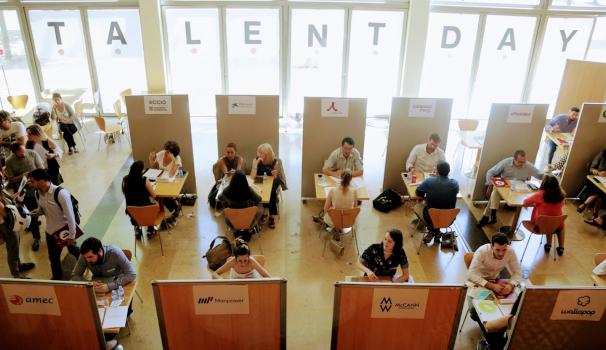
This service provides graduates with the necessary means so that they can actively participate in their professionalism and propose optimal candidates to organizations and companies looking for staff.

Job Bank

The leap into the world of work is always a challenge. For this reason, we provide a Job Bank for students and graduates. This service puts students in touch with companies and institutions looking for staff.

Social Commitment
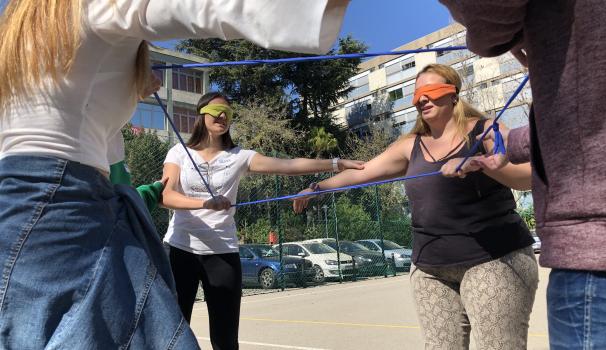
Solidarity and the struggle for human dignity are values that identify us. Social Commitment is a volunteer program that our students can join to participate in projects in the Third and Fourth World.

Alumni service

Studying in Blanquerna allows you to be part of our community. Being a college student opens the door to a lot of options for continuing your vocational training beyond your time in the classroom.

Sports service

Want to represent the URL in college sports tournaments? You can find a wide range of possibilities for both individual and team sports. To be a student of Blanquerna, you will have a discount at the Can Caralleu and La Salle Sport & Fitness sports complexes.

Personal Guidance Service (SOP)

If you are in a difficult situation in the academic, personal or social field, you can request, free of charge, the personalized attention of the SOP. This is an interdisciplinary team of professionals who will guide you in dealing with the situation.
Faith and Spirituality
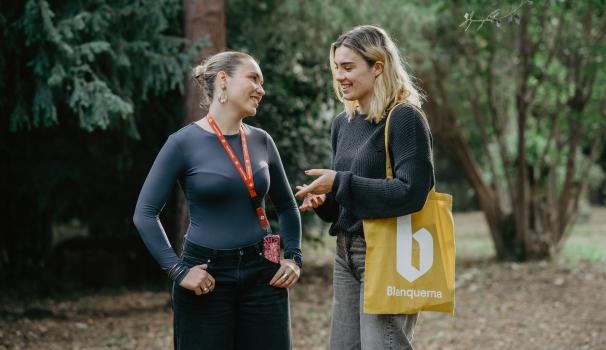
In the three Blanquerna faculties, you will find spaces for reflection isolated from the hustle and bustle dedicated to the celebration of the Faith or cultural and religious animation. If you wish, you can also receive personalized attention and information about church life.
Diversity support
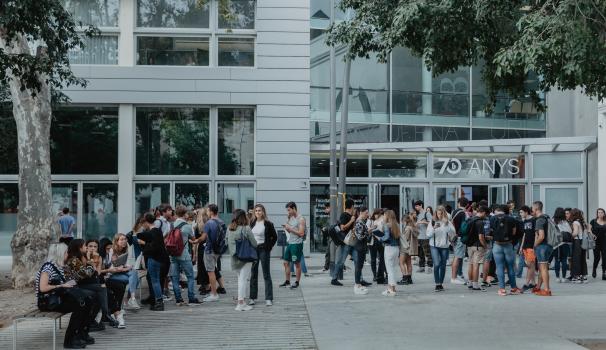
At Blanquerna we promote personal development at all levels to people with a diversity of specific needs from a normalizing context that encourages personal autonomy and uniqueness.

Blanquerna Choir
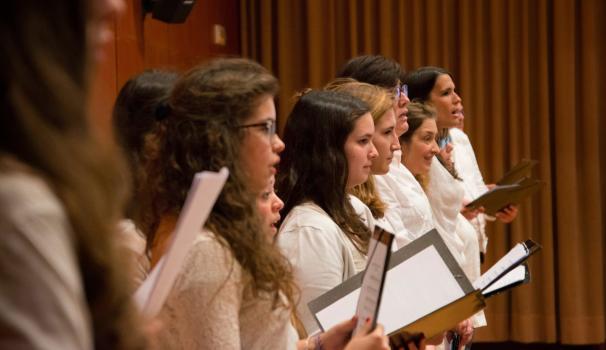
If you like music and want to take part in the concerts of institutional events and festivities, sign up for the Blanquerna Choir. There you will meet new friends and enjoy music.

Blanquerna Symphony Orchestra
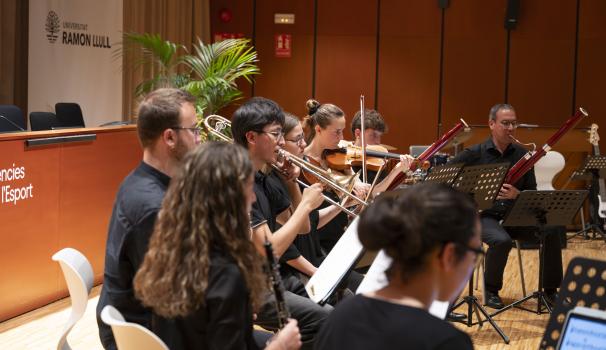
If you play a string instrument (violin, viola, cello, double bass…), a wind instrument (oboe, clarinet, bassoon, French horn, trumpet, trombone, tuba…), or percussion (timpani…), join us! And don’t worry — if you play another instrument (saxophone, drums, flugelhorn…), you’re also welcome to audition!

Student representatives

Each class group must elect a representative to put forward concerns or make proposals to the faculty members and academic management. At the same time, each degree must appoint a delegate and each school a representative on the general URL council.
Student Council
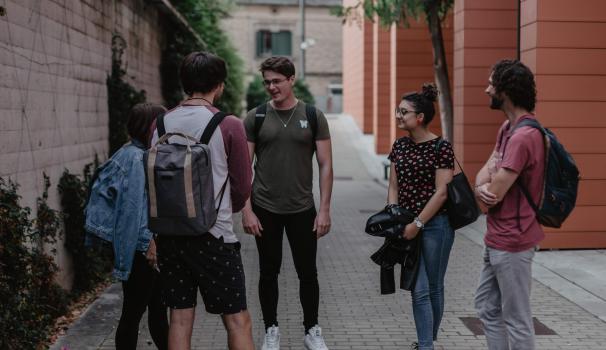
Contact between students and the university is constant and is channeled through the Student Council, the body that collects proposals and requests from students and facilitates university life.

Language support service

Are you studying a foreign language and want to improve your level? Do it at your own pace in the language self-learning classroom. This service offers various teaching resources and materials to practice the language.

Anti-harassment Point

We’re here to listen! Have you experienced or witnessed any situation of harassment? Do you have any questions about Blanquerna’s equality policy? Would you like to make a proposal or suggestion regarding gender issues? Use this Anti-harassment Point: write to us through the channels you’ll find at the bottom of this page.
Application for admission
The application process for a place in the 2026-2027 academic year is now open and consists of three phases:
- Application for admission
- Admission
- Enrollment
1. Application for admission
The application for a place can be made online or in person and entitles the applicant to participate in the admission process.
It can be done via the Application for admission button on the page for each degree, or directly from here, and requires:
- Registering in the single registration system and creating a user account (if not done previously).
- Making a payment of €50 (non-refundable) for admission rights and procedures. This can be done with a credit or debit card through a secure and confidential process with BBVA bank.
- Uploading the documentation to the document repository before the deadline for the place application process.
- Identification document (DNI, NIE, Passport)
- Certification of university entrance qualifications (PAU (University Entrance Exams), CFGS (Higher-Level Vocational Training), International Baccalaureate Diploma, etc.) if available at the time of applying for a place.
It can be done at the School itself, by going to the Student Information and Guidance Service (SIOE), and the following must be submitted:
- Photocopy of the identification document (DNI, NIE, Passport)
- Photocopy of the certification of university entrance qualifications (PAU (University Entrance Exams), CFGS, International Baccalaureate Diploma, etc.) if available at the time of applying for a place.
- Payment of €50 (non-refundable) for admission rights and procedures. This can be made in cash or with a credit or debit card.
2. Admission
Approximately within two working days after the place application, the student will be informed by email about their admission. If admitted, the same message will invite them to formalize enrollment, including instructions on when and how to complete the procedure.
The criterion used to call admitted students to formalize enrollment will be the order of payment of the place application. For degrees with more than one shift, note that a shift may fill up during the enrollment period. The place will be definitive once the student has submitted the documentation with the final university entrance information and the first enrollment payment has been made.
For degrees taught in English, students must demonstrate a minimum B2 level of English to be admitted. The level can be accredited through the level test that all degree students must take before starting their program. To prove the minimum level, an official language certificate of B2 or higher can also be submitted: IELTS (6-7), TOEFL (IBT 90-110), CAMBRIDGE, or Official Language Schools, obtained within the last two years. Certificates from other organizations will not be accepted. The certificate does not exempt students from taking the level test to determine the English level for the first year.
It is the student's responsibility to have a level equivalent to B2 in the language of instruction of the degree to properly follow classes
3. Enrollment
The student called to enroll may choose between two options, depending on whether they already have the definitive entrance pathway or not.
- Conditional Enrollment
Enrollment in the degree can be formalized before passing the PAU (University Entrance Exams) or CFGS or having the entrance pathway. Enrollment will be conditional on the presentation of the corresponding admission pathway. This option secures the place and allows choosing the shift, in the case of degrees with more than one shift, while places are available.
If the student does not obtain the entrance pathway, the enrollment fee will be refunded, but they will lose the place, preference in shift selection, and the amount paid for the place application (€50). If places remain available in July, they may choose to stay on the waiting list until September, and the money will be held, but they will no longer have preference for shift selection. If they do not obtain the entrance pathway by September, the enrollment fee paid will be refunded.
- Final enrollment
It will be formalized if, at the time of processing the enrollment, the student already has the university entrance pathway. They may opt for the available places and shifts.
IMPORTANT: Degrees with more than one shift may exhaust places in a specific schedule with conditional enrollment. The required documentation must be uploaded via the Document Repository.
The place will be definitive once the student has submitted the documentation with the final university entrance information and the first enrollment payment has been made.
NOTE: Students in the Communication Degrees must take an English level test that will not be exclusionary for admission but will determine the level at which they start the first year. Each student will be informed of the test date and time by email.
Studies can be paid upfront and/or in interest-free installments. If payment by installment is selected, upon enrollment the student will have two business days to pay 50% of the total cost of the enrolled credits, using their chosen form of payment; this payment will not be taken by direct debit. The remaining 50% will be divided into nine monthly payments from October to June via bank direct debit from the account provided at the time of enrollment. Prices for each academic year are updated annually.
Once payment is made, the corresponding receipt of enrollment can be viewed in the student's Document Repository and via the student's portal.
INTERNATIONAL OR FOREIGN STUDENTS
For the foreign student admission process, the following considerations and requirements must be taken into account in accordance with the prevailing regulations.
Students must apply to the Universidad Nacional de Educación a Distancia (UNED) to obtain the credential certifying that they meet the requirements to access university studies within the state education system (UNED Credential). Therefore, they do not need to take the PAU (University Entrance Exams), but without the mentioned credential, they cannot enroll in our degrees.
The education systems that can be accessed through this pathway are: Germany, Andorra, Austria, European Schools (European baccalaureate), International Baccalaureate, Belgium, Bulgaria, Croatia, Denmark, Slovakia, Slovenia, Estonia, Finland, France, Greece, Hungary, Ireland, Iceland, Italy, Latvia, Liechtenstein, Lithuania, Luxembourg, Malta, Norway, the Netherlands, Poland, Portugal, the United Kingdom, the Czech Republic, Romania, Sweden, Switzerland, China and Cyprus.
These students may access our degrees by submitting the homologation of the High School diploma from the Spanish Ministry of Education or from the autonomous communities with transferred competence, such as the Generalitat de Catalunya. Proof of application for convalidation will be sufficient for students to enroll and begin taking a bachelor's degree course, however full enrollment is conditional on convalidation being confirmed. Bear in mind that convalidating studies can take more than three months to complete, so this process should be done in parallel with the admissions process to our bachelor's degrees. If the convalidation resolution is not obtained in the terms requested by the interested party, the results of any exams taken, or the enrollment made as a result thereof, are rendered null and void.
Contact
For any questions or inquiries about the place application or enrollment process, contact [email protected]
Treball Final de Grau
El Treball Final de Grau (TFG) és una assignatura d'11 crèdits que es desenvolupa al llarg del 4t curs, durant els dos semestres. Consisteix en l'elaboració d'un projecte que integri les competències bàsiques adquirides a la titulació.
Es tracta d’una experiència d’ús de coneixement i de contextualització en una problemàtica o situació específica.
Els objectius a assolir són:
- Dissenyar amb rigor una aproximació de caràcter tècnico-científic a una temàtica pròpia de l’Educació social o del Treball social.
- Integrar el major nombre possible de coneixements de caràcter conceptual, procedimental i actitudinal que s’hagin treballat durant el Grau.
Continguts
Es poden elaborar diferents tipus de TFG, de manera que cal diferenciar els aspectes conceptuals, propis de les temàtiques que abordi cada projecte específic, dels aspectes procedimentals, metodològics, de disseny i d’avaluació.
Tipologia de treballs
Hi ha cinc grans tipologies de TFG que s’agrupen en dos blocs: intervenció i recerca. Tot i això, hi poden haver propostes de TFG que continguin components de més d’una tipologia de treball (per exemple, pot ser un treball de recerca aplicada que té una part d’intervenció). L’estudiant haurà d’ajustar el guió definitiu del TFG amb el seu tutor.
TFG Intervenció: Es tracta de desenvolupar una proposta d’actuació socioeducativa en un context específic, a partir de l’estudi diagnòstic d’aquella realitat. Es pot especificar en dues tipologies que es presenten tot seguit:
- Disseny i/o implementació d’un projecte en un àmbit professional: anàlisi d’una realitat social, identificació d’una necessitat i disseny d’una proposta d’intervenció (i, si escau, també la seva implementació).
- Projecte d’emprenedoria social: anàlisi de l’entorn i el producte o servei, anàlisi del mercat, detecció de necessitats actuals i emergents, pla de màrqueting, planificació organitzacional i financera i pla d’avaluació.
TFG Recerca: Es tracta d’una proposta de treball d’anàlisi i/o aprofundiment d’una temàtica de l’acció social. Es pot concretar en dues tipologies que es presenten tot seguit:
- Treball de recerca aplicada: pretén generar coneixement fonamentat a partir de l’anàlisi de resultats empírics i/o oferir recomanacions per a la intervenció social.
- Treball d’aprofundiment teòric: estudi que té com a objectiu descriure l’estat de la qüestió sobre una temàtica, l’ampliació, la intensificació o aclariment d’aspectes conceptuals o teòrics d’un camp coneixement.
- Treball sobre un cas únic: consisteix en fer una presentació de la problemàtica específica d’un cas i/o problema a abordar, l’exposició de motius o raons fonamentals per plantejar i dur a terme l’anàlisi d’aquell cas, explicar la situació de partida, proposar una acció i els beneficis que pot aportar la seva implementació.
Metodologia
El TFG és individual, exceptuant aquells casos que, en funció de les seves característiques, es consideri la conveniència de realitzar-lo en un petit grup. S’ha de redactar en català, castellà o anglès però, en qualsevol cas, el treball haurà d’incloure un resum en aquestes tres llengües.
La realització del TFG té una durada de dos semestres, i el supervisa un/a professor/a mitjançant tutories (individuals i grupals) presencials i a través del campus virtual.
Sistema d'avaluació
L'avaluació del TFG inclou:
- Avaluació contínua: seguiment continuat de cada treball i lliurament de dos informes de progrés.
- Presentació avant-projecte de TFG: Presentació d’un avantprojecte en què es desenvolupin de manera estructurada i fonamentada els aspectes més rellevants del treball.
- Presentació i defensa pública davant d'una comissió d'avaluació constituïda per professors/es de l'àrea.
- * Caldrà realitzar un mínim de 4 tutories amb el tutor/a per dipositar el TFG.
Scholarships, awards, and grants Blanquerna-URL
Public aid
funding
Pràctiques
El Pràcticum de Grau esdevé un dels eixos principals de cara a l’assoliment de les competències professionals. És l’element que serveix de pont entre el món acadèmic i el món professional, ja que permet connectar els aprenentatges teòrics amb aquells que són més pràctics.
A causa de la importància de la dimensió pràctica de les nostres professions i del fet que el Grau prepari essencialment per al seu exercici, el Pla del Pràcticum es desenvolupa de forma progressiva al llarg dels quatre anys dels estudis del Grau. Durant els dos primers cursos, el Pràcticum s’organitza en seminaris pràctics, mentre que en el tercer i el quart curs les pràctiques es realitzen en centres.
Des d’aquesta òptica no hem d’identificar el Pràcticum amb les pràctiques externes, sinó que hem de tenir en compte que integra tant el treball realitzat a les aules de la universitat com l’aprenentatge en la pràctica de l’exercici professional.
Triple dimensió del Pràcticum
El Pràcticum, ja sigui des del treball a les aules de la universitat com en l’espai de pràctiques, ha d’assegurar una triple dimensió:
- Capacitació personal: conèixer les pròpies capacitats, habilitats i destreses, relacionades amb la professió.
- Capacitació acadèmica: adquirir coneixements i desenvolupar competències vinculades a l’exercici professional, als àmbits que pot tractar i als posicionaments teòrics que emmarquen l’acció social.
- Capacitació tècnica: saber aplicar instruments i protocols imprescindibles en l'activitat professional quotidiana.
RELATED PROGRAMS