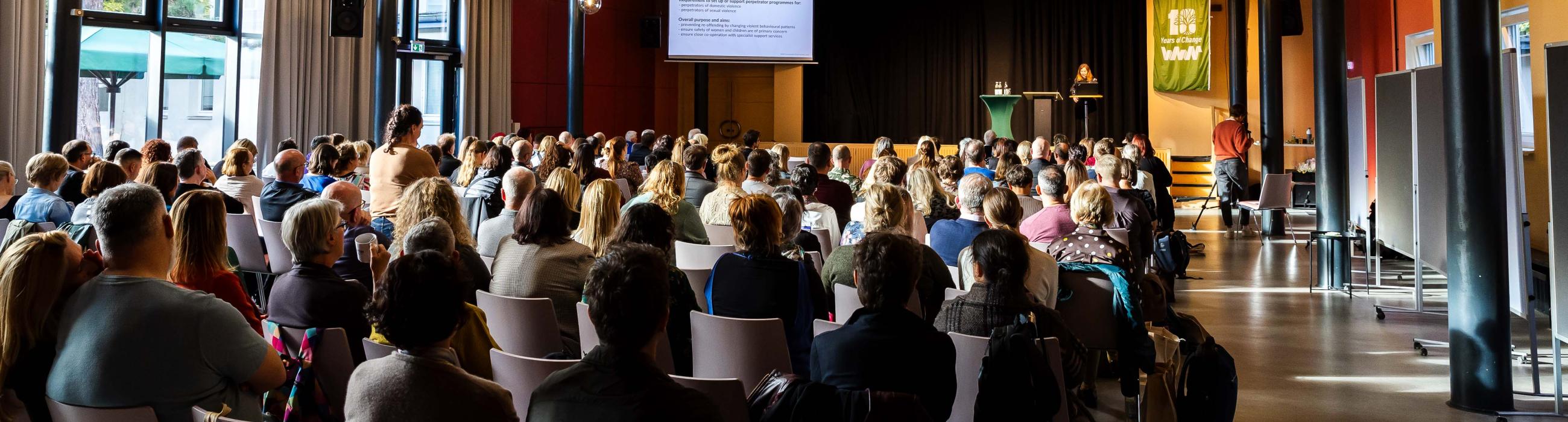
The first European Lifelong Learning Master’s focused specifically on intervention with perpetrators of gender-based violence. This program offers the opportunity to learn from recognized faculty and experts from across Europe and other international contexts.
- Home/
- Lifelong Learning Master’s Degree in Intervention Strategies with Perpetrators of Gender-Based Violence: Social, Clinical, and Legal Perspectives
Lifelong Learning Master’s Degree in Intervention Strategies with Perpetrators of Gender-Based Violence: Social, Clinical, and Legal Perspectives
Enrolment open

- ModalityHybrid learning format
- LanguagesEnglish
- DurationOne and a half years
- Credits60
- DateOctober 1, 2026
- Ending DateDecember 31, 2027
- Location
Online
- Faculty
School of Psychology, Education and Sport Science
Three reasons to choose this master's degree
The first master’s program to combine academic excellence with intensive practical training in intervention with perpetrators of gender-based violence. The program is taught by renowned professionals and researchers with extensive experience in the field of gender-based violence and intervention at the European level.
Delivered primarily online, with the opportunity to participate in an intensive one-week in-person training session in Barcelona.
Master’s Degree accredited by Blanquerna – Universitat Ramon Llull (Barcelona), co-directed with the European Network for the Work with Perpetrators of Domestic Violence (WWP EN), and developed in collaboration with various European universities.
The objective of this Master’s Degree is to provide specialized training to university graduates wishing to develop professional competencies in intervening with perpetrators of gender-based violence.
The program is especially aimed at professionals in the social sector, the penitentiary system, probation, and other related areas, who are seeking new tools and knowledge to intervene with people who have perpetrated gender-based violence.
Throughout the master’s, students will acquire practical intervention tools, apply evidence-based approaches, and be trained to design, implement, and evaluate various interventions with people who have perpetrated gender-based violence in various contexts.
This master’s has been developed jointly by Blanquerna – Universitat Ramon Llull and WWP EN, a collaboration that integrates practice-based knowledge, academic expertise, and support from various European universities.
The course is structured into 8 main modules consisting of intensive theoretical seminars. Each module consists of 4 to 7 ECTS, with the exception of Module 3 (14 ECTS), which is specifically dedicated to skills-building and practical competencies. This module includes the option for a one-week in-person training in Barcelona. Students who cannot travel will have the option to follow it online. The program includes a Master's Degree Thesis (TFM) of 6 ECTS.
Who is it for?
This course is geared towards professionals in the social, health, or legal fields who work or want to work with people who have perpetrated gender-based violence. It is also intended for students or graduates in psychology, criminology, social work, social pedagogy, and other social science disciplines.
A university degree in social sciences or a relevant field is required.
The coordination team will prioritize professionals already working in the sector during the admission process. Priority will be given to professionals already working in the sector.
- Course 1: Feminist Theory
- Course 2: What Is Gender-Based Violence?
- Course 3: Impact of Gender-Based Violence and Domestic Violence
- Course 4: Social Responses to Stop Violence and Ensure Victim Safety
- Course 5: The Role and Characteristics of Programs for Perpetrators of Domestic Violence
- Course 1: Principles for Assessing Risk in Gender-Based Violence
- Course 2: Risk Assessment and Safety Planning
- Course 3: Providing Contact with the Partner in the Context of Perpetrator Programs
- Course 1: Intake Phase and Building the Relationship
- Course 2: Ensuring Victim Safety When Working with Perpetrators of Violence
- Course 3: Group Facilitation
- Course 4: Programs for Perpetrators of Violence – Facilitating the Intensive Work Phase
- Course 5: Closure and Follow-Up in Work with Perpetrators of Violence
Course 1: Interventions for High-Risk Perpetrators and Those Driven by Denial
Course 2: Perpetrators with Multiple Issues and Neurodivergent Perpetrators
Course 3: Intersectionality in Work with Perpetrators – Youth, Women, and LGBTQ+ Perpetrators
- Course 1: Understanding Sexual Assault Against Adults
- Course 2: Sexual Offenders Against Children
- Course 3: Legal, Ethical, and Institutional Responses to Sexual Assault
- Course 1: Research Methodologies in Gender-Based Violence
- Course 2: Ethical Considerations in Research on Gender-Based Violence
- Course 3: Evaluation of Gender-Based Violence Prevention Programs
- Course 4: Current Trends and Emerging Issues in Gender-Based Violence Research
- Course 1: Why Is Communication Relevant When Working with Perpetrators of Domestic Violence?
- Course 2: Strategic Planning in Domestic Violence Programs
- Course 3: Project Development and Stakeholder Networks
- Course 1: Early Intervention in Domestic Violence
- Course 2: Bystander Intervention and Community-Based Intervention
- Course 3: Follow-Up Groups and Community Support Models
Tuition fee for 2026-2027
Financing: the amount can be paid in installments according to the following payment plan:
1st year enrollment: €4,320
2nd year enrollment: €480
This master's degree equips professionals to intervene in programs working with perpetrators of gender-based violence across various contexts: social services, penitentiary systems, community programs, probation services, third-sector organizations, and prevention projects. It also prepares students to participate in the design, implementation, and evaluation of evidence-based intervention and prevention programs.
Coordination
Dr. Berta Vall. Professor at the FPCEE Blanquerna-URL. Expert in research on gender-based violence, particularly in intervention with male perpetrators of gender-based violence. Coordinator of the research and development area at the European Network for the Work With Perpetrators of Domestic Violence – WWP EN.
Dra. Alessandra Pauncz. Executive Director of the European Network for the Work with Perpetrators of Domestic Violence (WWP EN). Founder of the first perpetrator intervention programme in Italy and of the Italian National Network of Experts in Perpetrator Intervention.
Sandra Jovanovick. Coordinator of the training and professional development area at the European Network for the Work With Perpetrators of Domestic Violence – WWP EN. Founder of the National Network of Experts in Intervention with Perpetrators of Gender-Based Violence in Serbia.
Teaching Staff
Dr. Anna Vilaregut. Professor at the FPCEE. Expert in systemic therapy. Coordinator of the project on elder abuse for the Barcelona City Council.
Dr. Lourdes Artigas. Professor at the FPCEE. Expert in therapy focused on sexuality and couple therapy.
Dr. Julieta Piastro. Professor at the FPCEE. Expert in feminist theory and perspective.
Dr. Alessandra Pauncz. Executive Director of the European Network for the Work With Perpetrators of Domestic Violence – WWP EN. Founder of CAM, the first intervention program for perpetrators of gender-based violence in Italy, and of the National Network of Experts in Intervention with Perpetrators of Gender-Based Violence in Italy.
Dr. Dean Ajdukovic. Professor at the University of Zagreb, Croatia. Psychologist and researcher expert in gender-based violence intervention. Expert in primary, secondary, and tertiary prevention actions.
Dr. Juha Holma Professor at the University of Jyväskylä (JYU), Finland. Expert in research and intervention with perpetrators. Coordinator of the perpetrator intervention program for gender-based violence at JYU.
Dr. Marianne Hester. Professor at the University of Bristol, United Kingdom. Expert in research on victims and perpetrators of gender-based violence from a gender perspective.
Sandra Jovanovic. Coordinator of the training and professional development area at the European Network for the Work With Perpetrators of Domestic Violence – WWP EN. Founder of the National Network of Experts in Intervention with Perpetrators of Gender-Based Violence in Serbia.
Kate Iwi. Director of Pact at Pact, consultancy and training on partner abuse. Has worked in the field of domestic violence for 30 years. In addition to working with perpetrators of violence both individually and in groups, she has facilitated parenting groups, support groups for women, and therapeutic work with children.
Dr. Marisol Lila. Full Professor of Social Psychology. Her research focuses on the social visibility of intimate partner violence and the justice system’s response to intimate partner violence (police responses and court-mandated perpetrator programs). Director of an intervention program for perpetrators of violence (Programa Contexto) at the University of Valencia.
Dimitra Mintsidis. Coordinator of the finance and projects area at the European Network for the Work With Perpetrators of Domestic Violence – WWP EN. Expert in communication and fundraising.
Dr. Kieran McCartan. Professor at the University of the West of England (UWE), where he leads the Social Science Research Group (2013 – ongoing). Joint Coordinator of the Sexual Violence Research Network (2014 – ongoing) at UWE. Professor at the University of Bristol, United Kingdom. Expert in sexual offenders, with research focused on improving intervention to reduce recidivism and enhance primary prevention. Expert consultant for the European Commission and the Joint Research Center.
Dr. Chris Newman. Director and Clinical Supervisor at DVACTPAI. Practice supervisor and consultant for organizations working with perpetrators of domestic violence. He worked as a research psychologist before specializing in violence prevention and parenting work with those who have used violence in the family.
Camelia Proca. Founder and director of A.L.E.G., a civil society organisation active for gender equality in Romania and Eastern Europe. Former board member of Women Against Violence Europe (WAVE), currently on the advisory board of the Global Fund for Children.
Dr. Jonathan Fowler. Currently facilitator on the Reprovide perpetrator programme, DVPP trainer and external supervisor, mental health advisor for the Drive programme, and collaborator with specialised complex needs services.
Dr. Ioan Durnescu. Professor at the University of Bucharest. Research and teaching in probation, prison and deradicalization, with special interest in comparative probation and reentry. Co-editor of the European Journal of Probation.
Dr. Martín Hernán Di Marco. Sociologist and Assistant Professor in the Violence and Violence Prevention research programme at Leiden University and researcher in the CRI.M.L.A project at the University of Oslo. His research focuses on interpretative patterns and life trajectories of femicide perpetrators.
Dra. Nicole Westmarland. She is a Doctor and Professor at Durham University and Director of the Durham Centre for Research into Violence and Abuse (CRiVA). Her research has focused on men’s violence against women, particularly rape, domestic violence, and prostitution.
Stages of the admission process
The admission process for the school's own degree studies is developed in 3 stages:
Application for admission
Admission
Enrollment
Application for admission
Students can application for admission online (by accessing Application for admission | Blanquerna or the application for admissionoption for each course) and also in person at the school.
For online application for admission, you will need to:
- Sign up on the unique registration system and create a username (if not previously obtained) and follow the instructions to completion.
- Make a payment of €50 (non-refundable fee for pre-enrollment rights and processing) can be made by credit or debit card, through a secure and confidential BBVA process.
- Upload the required documentation through the document repository.
- ID card (both sides) / Passport
- Curriculum vitae
- For foreign (non EU) applicants: a certificate issued by the competent authority (University, Embassy, Consulate) attesting that the access studies qualify for admission in the home country.
Admission
Once pre-enrollment has been completed, the candidate will be offered a date for an interview with the degree coordinator, who will assess their suitability and solve any doubts they may have about the course for which they are enrolling. Once the assessment is complete, the student will be informed of the result of the interview and how to enroll, if admitted.
Prior to enrollment, the person concerned must upload the qualifications or the receipt of the university studies completed to the document repository. If these documents are not available, the course may be taken but the qualifications will not be received and, instead, a university extension certificate or diploma will be obtained.
Enrollment
Once the above documentation has been assessed, and when there is a large enough group of pre-enrolled students, each candidate will receive the confirmation and information necessary to enroll. Enrollment implies obtaining a definitive place and will take effect within the deadlines indicated in the confirmation e-mail.
When students enroll, they will have two business days to pay the total cost of enrollment, by bank transfer, credit card or barcode. Studies can be paid in installments, without any interest, by bank transfer (Instructions to send the signed SEPA Document to Blanquerna)
Prices may be updated each academic year. Once enrollment has been formalized, the amount paid will not be refunded under any circumstances. Pre-enrollment and enrollment may remain open up to 15 days before the start of the course, provided places are available.
When a student enrolls, a contract for the provision of teaching services is formalized between the student and the Blanquerna Foundation, which is legally binding from the time of payment. Payment includes the corresponding insurance and, for students under the age of twenty-eight, compulsory academic insurance. If a student declines to take up a place, he/she will lose in full any amount he/she has paid.
The student accepts the rules for the use of computer services established by the Blanquerna Foundation. The student's personal data will be included in an automated file under the responsibility of the Blanquerna Foundation, so that this contract can be maintained and fulfilled. Students should note that their data may also be used to inform them about the future activities of the Foundation, or for the institution to send them publications.
In accordance with the provisions of Organic Law 15/1999 on the protection of personal data, students have the right to access their data to update, rectify or cancel them, or object to their use, by sending a letter, indicating which right they want to exercise.
This section is a summary of the general conditions for enrollment. It is only for guidance and therefore has no contractual value. In the event of any discrepancy, the provisions of the general conditions for enrollment specified in the receipt generated at the time of enrollment will prevail; this receipt formalizes the contract between the student and the Blanquerna Foundation; students can consult it on the intranet whenever they wish.
The School cannot guarantee that a course will be available if the requirement for a minimum number of enrollments is not met. In this case, the amount paid for enrollment and pre-enrollment will be refunded in full.
Foreign students
Applicants who have completed access studies outside Spain must obtain a certificate issued by the relevant body (university, embassy, consulate) confirming that the studies qualify the student in the country of issue to take the master degree or graduate studies.
Students are responsible for having all the official documentation necessary for their stay in Spain while studying at the School. Applicants can ask for a pre-acceptance document attached to the pre-enrollment receipt to initiate applications for visas or scholarships or carry out any other administrative procedure. Under no circumstances does this document guarantee a place if all the access and admission requirements are not met. Once applicants have been accepted and enrollment is complete, they can request a letter of admission from the Academic Secretary, if required, by paying the corresponding fees.
Contact us
For any doubts or queries about the pre-enrollment or enrollment process, please contact the School's Student Information and Orientation Service
[email protected]
The Final Master's Degree Thesis (TFM) carries a workload of 6 ECTS and will be developed over the last six months of the second year of the master's program.
RELATED PROGRAMS